
The choice of suture material plays a critical role in surgical outcomes, influencing operative efficiency, post-operative recovery, and long-term tissue healing.
Sutures account for approximately 57% of the global surgical equipment market, underscoring their continued importance in wound management and closure.
Among the available options, black braided silk sutures remain a staple in modern surgery due to their favorable handling characteristics and reliable knot security.
However, while they offer clear advantages in specific clinical scenarios, they also have limitations, particularly regarding infection risk and long-term tissue support.
In this blog, you’ll explore whether silk suture remains clinically appropriate in 2026, analyzing its composition, performance profile, indications, and limitations in modern surgical practice.
Key Takeaways:
- Black braided silk sutures are natural, non-absorbable threads made from fibroin and processed to improve handling, coating, and visibility.
- Silk offers strong knot security and pliability, making it suitable for ligation and delicate procedures across multiple surgical specialties.
- Although non-absorbable, silk gradually loses tensile strength over time due to proteolytic degradation.
- The braided structure increases tissue drag and the risk of bacterial colonization, making it less suitable for contaminated or cosmetic wounds.
- Effective use of silk depends on proper technique, wound selection, and patient factors, given the risk of infection and tissue reactivity.
What Are Black Braided Silk Sutures?
Black braided silk sutures are natural, non-absorbable, sterile threads composed of an organic protein called fibroin, derived from the domesticated silkworm Bombyx mori.
Raw silk fibers contain approximately 20-30% sericin (a gum-like coating), which is removed during manufacturing through a degumming process. This process serves two critical purposes:
- Removes immunogenic (immune-triggering) waste by-products that could lead to adverse tissue reactions.
- Preserves the natural elasticity and strength of the silk filaments while eliminating unnecessary mass.
After braiding, the sutures undergo further refinements to improve their surgical performance. They are as follows:
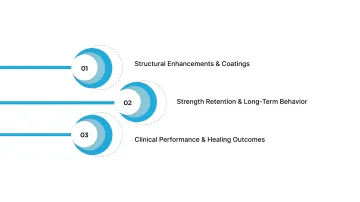
1. Structural Enhancements and Coatings
Once the braiding is complete, manufacturers add coatings and colorants to improve surgical performance.
Visibility Enhancement
Silk sutures are often dyed black using approved colorants like logwood extract or other certified colorants. This improves visibility during surgery, particularly in bloody fields or pale tissue, where good contrast is essential.
Coating Materials
To address the physical limitations of the braided structure, beeswax or medical-grade silicone coatings are commonly applied. These coatings serve multiple purposes:
- Reduce capillarity (fluid wicking along interfilament gaps)
- Decrease tissue drag during passage
- Limit fluid absorption
- Help lower tissue reaction by smoothing the surface.
2. Strength Retention and Long-Term Behavior
Silk presents a classification paradox: classified as "non-absorbable” by regulatory bodies, yet it behaves biologically as a degradable material due to proteolytic degradation.
The silk fibers are gradually broken down by proteolytic enzymes (protein-digesting enzymes) over time, unlike the hydrolysis seen with fully synthetic absorbable sutures.
Here’s what happens over time:
- Silk initially provides reliable tensile strength during early wound healing
- Over time, it undergoes progressive loss of strength. approximately 50% of its original strength, due to tissue reaction and enzymatic breakdown
- This loss occurs over months, unlike rapidly absorbable materials
3. Clinical Performance and Healing Outcomes
The clinical performance of silk sutures is influenced by their retention of tensile strength, susceptibility to microbial colonization, and tissue interactions.
Real Case Study:
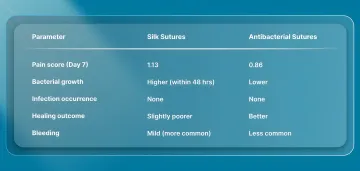
In a randomized trial of 100 minor oral surgery patients, braided silk sutures were compared with antibacterial triclosan-coated sutures over 7 days.
- By day seven, pain scores were slightly higher in the silk group (1.13 vs 0.86).
- Silk sutures showed significantly greater bacterial growth within 48 hours.
- Although no infections occurred, mild bleeding and poorer healing were more common with silk sutures, especially in the lower jaw.
These findings suggest that the braided structure of silk sutures can trap bacteria and may lead to greater pain and microbial accumulation than antibacterial alternatives. This highlights the need for balanced material selection in surgical settings.
These defining characteristics help explain the clinical scenarios in which black braided silk sutures are preferred.
4 Key Clinical Indications for Black Braided Silk Sutures
Black braided silk sutures are widely used across surgical specialties due to their reliable knot security and pliability.
They are particularly favored in procedures where precise ligation and tissue handling are critical, offering advantages in both small vessel ligation and delicate tissue closures.
Below are the primary clinical applications of black braided silk sutures.
1. Cardiovascular and Vascular Surgery Applications
Silk's pliability and knot security make it a preferred choice for vessel ligation, particularly in small to medium vessels where precise knot placement is critical.
The braided structure creates friction that holds knots securely, preventing slippage during critical moments after tying off bleeding vessels.
Appropriate Sizing for Vascular Use:
- Fine sutures (7-0 to 6-0): Used for small vessel repair and grafting, and fine suturing in delicate areas such as the hand, nailbed, and face.
- Small-to-moderate sutures (5-0 to 4-0): Used for larger vessel repair, skin closure (hands, limbs, face), and tendon repair, where a balance of strength and precision is required.
- Intermediate sizes (3-0 to 2-0): Used for closure of thick skin, fascia, muscle, and tendon repair, rather than fine vascular work.
- Larger sutures (0 to 1): Used for high-tension closure of fascia and drain fixation, not typically for precise vessel repair.
2. General Surgery and Gastrointestinal Procedures
Beyond vascular applications, silk is widely used to ligate structures during abdominal surgeries, including appendectomy, to secure the appendiceal stump.
3. Ophthalmic and Microsurgical Applications
Silk sutures are used in ophthalmic procedures involving the cornea and sclera, where fine control and secure knotting are essential.
Their handling characteristics and flexibility support precise manipulation of delicate ocular tissues, although modern practice increasingly relies on synthetic alternatives.
4. Obstetric and Gynecologic Uses
Silk has traditionally been used for vessel ligation and hemostasis in cesarean sections and gynecologic procedures.
While modern practice often uses synthetic absorbable materials, suture ligation remains essential for controlling bleeding in the uterus and surrounding structures.
Gynecologic procedures also use silk as non-absorbable ligatures, providing long-term security without the need for permanent synthetic materials.
However, for cosmetically sensitive closures or when infection control is important, SubQ It! SU-10 helps eliminate the need for external suture removal visits. The system also supports recovery and cosmetic outcomes in smaller incisions.
Once you recognize where black braided silk sutures are indicated, it also highlights the importance of applying them correctly to achieve optimal clinical outcomes.
4 Best Practices for Using Silk Sutures Effectively
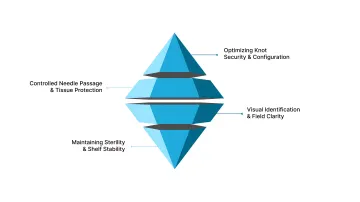
Black braided silk sutures are renowned for their excellent knot security and pliability, making them ideal for a wide range of surgical applications. Their unique handling characteristics, combined with specific best practices, make them a preferred choice for surgeons seeking reliable performance.
Below are some of the best practices for using silk sutures effectively:
1. Optimizing Knot Security and Configuration
Silk sutures are known for their excellent knot security due to the braided structure, which creates high friction and prevents knot slippage. Compared to monofilament alternatives, silk requires fewer throws to achieve secure knots.
Optimal Knot Configuration:
- Start with a surgeon’s knot (first throw with a double wrap).
- Follow with 3 square knots (total of 4 throws).
- In comparison, monofilament sutures may require 5–7 throws to prevent slippage.
Silk's minimal memory (tendency to return to packaged shape) makes it significantly easier to handle and tie than synthetic monofilaments, which often spring back and resist manipulation.
2. Controlled Needle Passage and Tissue Protection
The braided structure of silk creates more tissue drag than monofilament sutures, requiring a more controlled technique during passage.
Optimal Passage Technique:
- Grip the needle holder at the mid-shaft for maximum control.
- Enter tissue at a 90-degree angle to minimize trauma.
- Pull through at a moderate, consistent speed (avoid jerking).
3. Visual Identification and Field Clarity
In darkly pigmented tissues, visual contrast between the suture and surrounding tissue may be reduced.
In such cases, selecting a suture with a contrasting color can improve visibility, supporting more accurate placement and easier identification during removal.
4. Maintaining Sterility and Shelf Stability
Proper storage is essential to maintain the integrity of silk. For that, use the FDA regulatory requirements:
- Silk sutures should be stored under controlled conditions that limit exposure to heat, humidity, and light
- Storage should help maintain product stability
Alongside proper technique, it is equally important to recognize the clinical situations where black braided silk sutures may not be the most appropriate choice.
Limitations of Black Braided Silk Sutures
While black braided silk sutures offer excellent handling and knot security, they have their own limitations
Below are key scenarios where silk sutures should be avoided.
1. Infection Risk and Bacterial Colonization
The most significant limitation of black braided silk sutures is their tendency to harbor bacteria.
Silk sutures consistently harbor higher bacterial loads compared to monofilament alternatives, as the braided interstices create favorable conditions for microbial colonization.
2. Scar Formation and Cosmetic Impact
In addition to infection concerns, silk’s tissue reactivity makes it problematic for cosmetically sensitive areas. It should be avoided for skin closures where appearance is a priority.
3. High-Risk Patient Profiles
Silk sutures should be used with caution in patients with known hypersensitivity, immunocompromised status, or conditions prone to inflammation. Suture materials can trigger immune responses and act as a nidus for infection.
Final Thoughts
In 2026, the decision to use silk suture should be guided by clinical context rather than routine preference. Suture selection directly influences wound healing, post-operative recovery, infection risk, and cosmetic outcomes.
As surgical standards increasingly prioritize reduced complications and faster recovery, choosing the appropriate material has become an informed clinical judgement.
As surgical techniques continue to advance, systems like SubQ It! SU-10 offers a bioabsorbable, subcutaneous solution that uses 10 staples to close post‑surgical incisions up to 10 cm.
SubQ It! SU-10 uses a handheld delivery system to place fasteners beneath the skin in a subcuticular pattern, ensuring effective closure without sutures and eliminating the need for staple removal visits.
Reach out to explore how SubQ It! SU-10 supports post-biopsy healing and cosmetic outcomes, and learn more about this advanced solution.
FAQs
1. What is a silk suture?
A silk suture is a braided surgical suture made from natural silk fibers (fibroin) derived from the domesticated silkworm Bombyx mori. It is processed to remove gum, coated (often with wax or silicone), and dyed for visibility and smooth passage through tissue.
2. Are silk sutures absorbable?
Silk sutures are classified as non‑absorbable, meaning they are intended to remain until removed. However, they may gradually degrade via proteolysis over an extended period of about two years in the body.
3. Are silk sutures still used?
Yes. Silk is still used in modern surgery, especially where excellent handling, ease of tying, and secure knots are priorities. Surgeons may choose it for specific applications, such as ligatures or deep tissue closures.
4. What is silk suture used for?
Silk sutures are used for vessel ligation, securing drains, general soft tissue approximation, and some ophthalmic and cardiovascular procedures. Their ease of handling and knot security make them useful in situations where these characteristics are more important than long‑term tensile support.
5. What is a 1-0 silk suture used for?
A 1‑0 silk suture (a relatively heavier gauge) is typically used to ligate larger vessels, close fascial layers, and secure tissue under moderate to high tension.
6. Is Vicryl a silk suture?
No. Vicryl is a synthetic absorbable suture made from polyglactin 910, as classified by the FDA. It degrades through hydrolysis within weeks, unlike silk, a natural, non-absorbable fiber that persists in tissue for much longer.