Suturing requires controlled handling of a curved needle through variable tissue resistance, and even minor instability can affect accuracy and tissue integrity. In clinical practice, issues such as needle slippage, inconsistent grip, or poor angulation can lead to imprecise wound closure and unnecessary tissue trauma.
The needle holder for sutures, also known as a needle driver for sutures, is designed to address this by providing a stable, locked grip on the needle while allowing controlled directional movement during passage through tissue. It converts hand force into precise mechanical control, helping maintain alignment and reducing technical variability during suturing.
In this blog, we will understand what a needle driver for sutures is, how it works, its key types, and why it plays an essential role in safe and effective surgical suturing.
TL;DR
- Needle drivers ensure stable needle control during suturing, maintaining alignment and reducing variability in tissue penetration and exit.
- Selection is task-dependent, guided by needle size, tissue resistance, and required precision rather than a one-type-fits-all approach.
- Performance depends on design factors like jaw structure, locking mechanism, and TC reinforcement, which directly affect grip security and durability.
- Surgical use varies by context—from heavy-duty closure in general surgery to high-precision work in dermatology and microsurgery, requiring different instrument types.
- Routine inspection is essential because jaw wear, misalignment, or ratchet failure can silently reduce grip efficiency and compromise suturing accuracy.
What is a Needle Holder for Sutures?
A needle holder for sutures is a specialized surgical instrument used to securely grasp and control a suturing needle during wound closure procedures. It enables precise needle manipulation through tissue by maintaining a stable grip and controlled alignment throughout the suturing process.
In surgical practice, it is commonly described as a dedicated tool for holding curved needles and facilitating accurate passage through tissue layers without slippage or rotation.
What Materials Are Needle Drivers Made Of?
The material selection directly determines strength, wear resistance, and instrument lifespan:
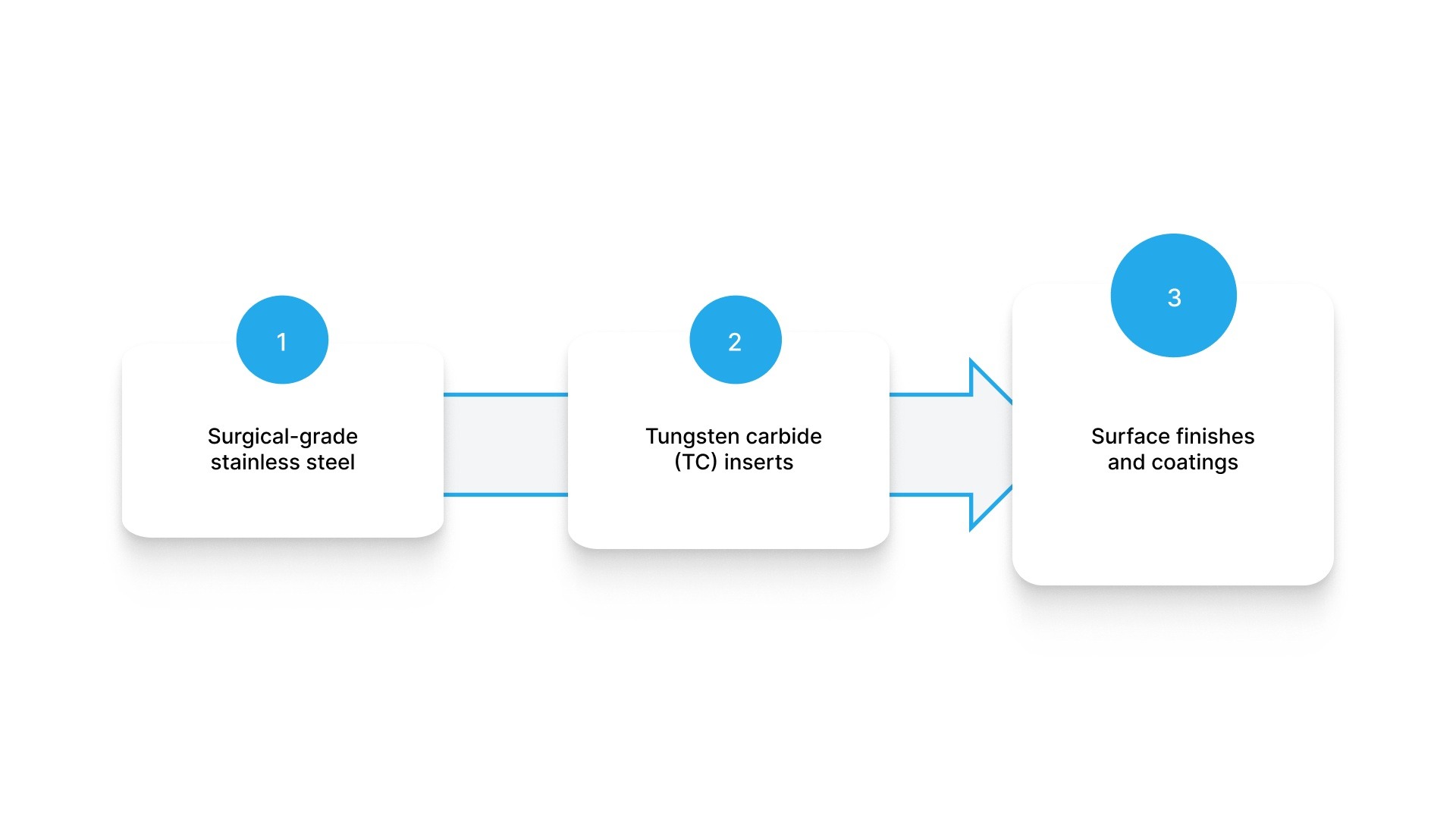 Surgical-grade stainless steel
- Primary structural material in most reusable needle holders
- Provides corrosion resistance, rigidity, and compatibility with repeated autoclaving
- Maintains structural integrity under repeated clamping forces
Tungsten carbide (TC) inserts
- Embedded into jaw surfaces to improve hardness and grip stability
- Significantly reduces wear from repeated needle contact
- Helps maintain consistent jaw alignment and reduces slippage over time
Surface finishes and coatings
- Matte or satin finishes reduce glare in operating room lighting
- Additional coatings may improve corrosion resistance and handling comfort
- Gold-colored handles are often used to indicate TC-insert instruments in surgical sets
Why Do Surgeons Use Different Needle Holders?
Needle holders (needle drivers) are available in multiple shapes, sizes, and material compositions, and their selection depends on the procedure being performed rather than personal preference alone.
A core principle in instrument selection is consistency in scale: small needle holders are used with small needles, while larger needle holders are reserved for larger needles. This simple alignment improves control, reduces needle stress, and supports more precise suturing.
What Design Features Impact Needle Holder Performance?
Needle holders differ primarily in jaw design, surface texture, and structural reinforcement. These variations directly affect grip, needle stability, and tissue handling.
Jaw surface
- Smooth jaws reduce trauma to delicate needles but may allow slippage, especially with smaller needles.
- Finely serrated jaws improve grip and help prevent needle rotation during suturing.
Reinforced inserts
- Tungsten carbide (TC) inserts increase durability and hardness
- Provide a more secure and consistent grip over repeated use
These design differences are important in maintaining both precision and instrument longevity in clinical settings.
What Are the Main Types of Needle Holders in Surgery?
Different needle holders are selected based on needle size, tissue type, and anatomical location:
Large, heavy-duty instruments (for trunk and extremities)
- Crile–Wood needle holder: A robust instrument with blunt tips, used when larger sutures and needles are required.
- Baumgartner needle holder: Strong, serrated jaws designed for secure handling of larger needles
- Mayo-Hegar needle holder: Durable, widely used driver suitable for general suturing in thicker tissue
Fine and precision instruments
- Webster (Halsey) needle holder: Shorter instrument with narrow jaws, used for finer needles and more delicate procedures
- Castroviejo needle holder: Spring-loaded, finger-loop–free design for microsurgical precision, commonly used in periocular and periauricular regions
Special multifunctional instrument
- Olsen–Hegar needle holder: Combines needle holding and suture cutting functions in one instrument; efficient but requires careful handling to avoid accidental suture damage
How Needle Drivers Are Used in Surgery?
Needle holders are used wherever controlled suturing is required. Their role is primarily mechanical and consistent across procedures:
- Guiding suture needles through tissue with controlled entry and exit
- Maintaining stable needle orientation during passage
- Supporting accurate approximation of wound edges
- Reducing unintended slippage or rotational movement of the needle
Which Surgical Procedures Require Different Needle Drivers?
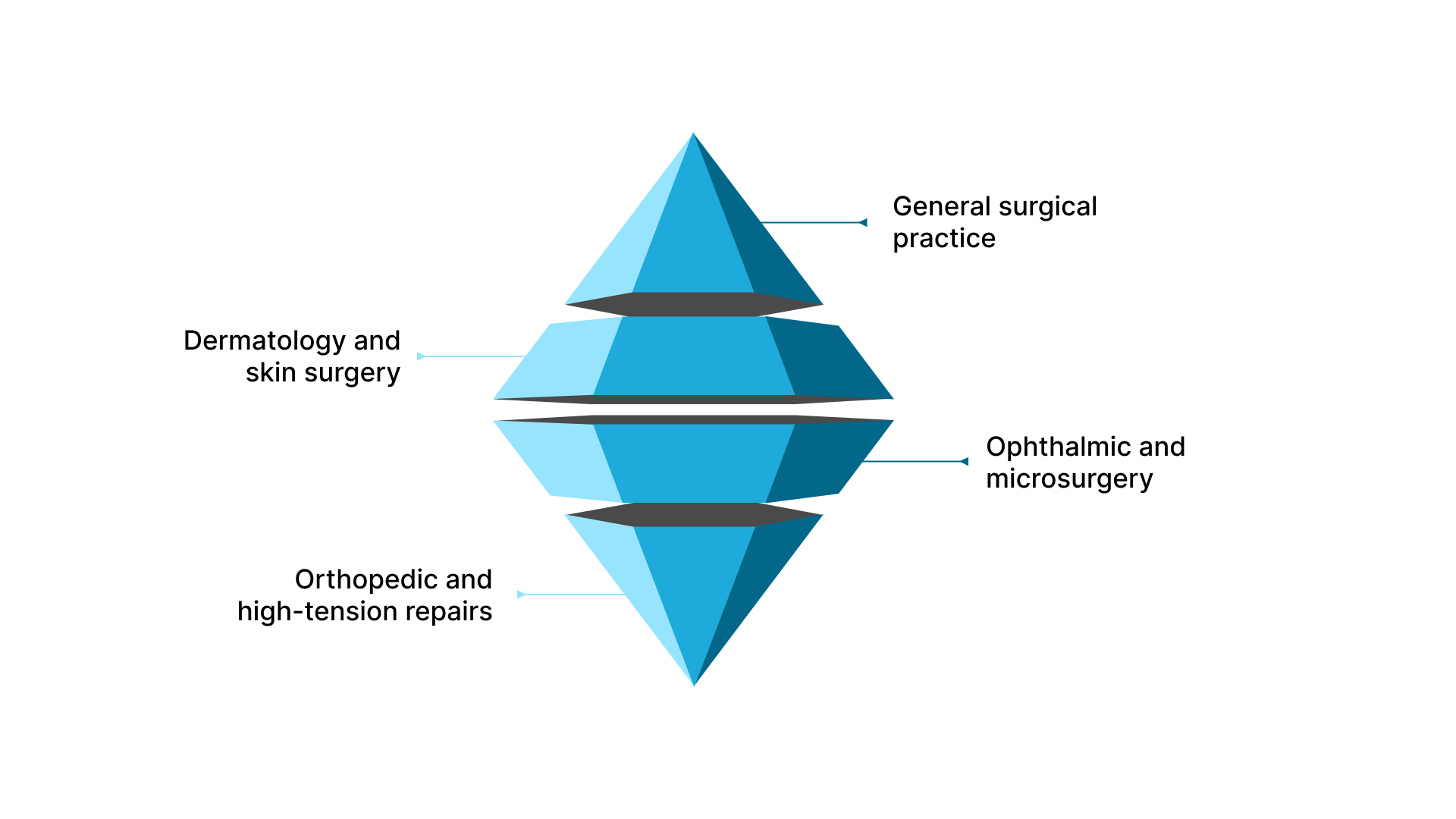
Needle drivers are adapted across specialties based on functional demand:
General surgical practice
- Used for routine closure of skin and deeper layers
- Requires durable instruments for varied tissue thickness
Dermatology and skin surgery
- Focus on superficial closure with fine needles
- Emphasis on minimizing scarring and tissue trauma
Ophthalmic and microsurgery
- Extremely fine, spring-loaded drivers used for high-precision suturing
- Designed for controlled handling in confined anatomical spaces
Orthopedic and high-tension repairs
- Heavy-duty needle holders are used for stronger suture materials
- Prioritize stability and secure needle grip under resistance
How Should Needle Holders Be Inspected and Tested Before Use?
Needle holders (needle drivers) require routine inspection because their performance depends on precise jaw alignment, intact ratchet function, and stable grip strength. With repeated use, wear can gradually affect jaw contact or locking efficiency, potentially compromising suturing control.
A quick functional check used in clinical practice is that a properly functioning needle holder should be able to grip a fine hair on the back of the hand. Failure to do so suggests reduced jaw efficiency and warrants detailed inspection before reuse or sterilization.
How Do You Identify Functional Damage in Needle Holders?
Inspection should be performed after each procedure using a bright light and magnification when available. The goal is to detect early structural or surface-level defects.
- Jaw alignment test: No light should pass through closed jaws
- Small light gap → partial wear or insert damage
- Significant light passage → bent or misaligned jaws
- Cracks or fractures: Any crack in the jaws or joints compromises integrity and requires repair or replacement
- Jaw insert wear: Loss of surface roughness, especially at tips, indicates reduced gripping efficiency
How Is Mechanical Performance Tested in Practice?
Functional testing ensures the instrument still locks and holds under surgical conditions:
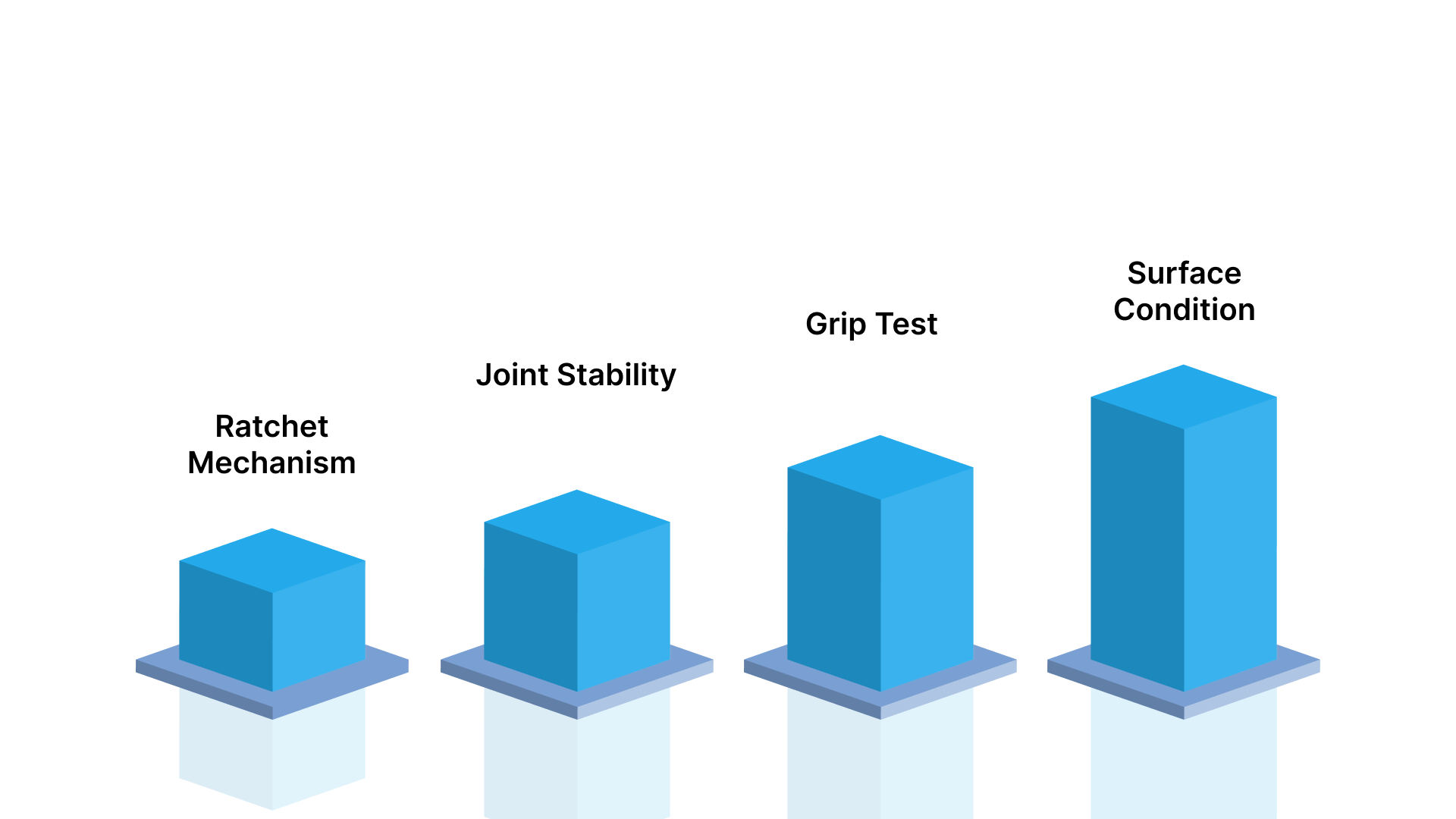
- Ratchet mechanism:
- First click should securely engage the jaw tips
- Full closure should occur at the third position
- Joint stability: Slight movement is acceptable, but excessive looseness indicates failure
- Grip test: If a needle rotates easily when locked, the instrument is no longer functionally reliable
- Surface condition: Rust shows pitting and cannot be removed; stains are superficial and cleanable
What Guides Needle Driver Choice in Real Surgical Settings?
Choosing a needle driver (needle holder) is fundamentally about mechanical fit and surgical control, matching the instrument to the needle, tissue, and working space. When this alignment is correct, suturing becomes more stable, predictable, and less traumatic to tissue.
Instead of relying on a single “preferred” instrument, clinicians typically select needle drivers based on how much force, precision, and access the procedure demands.
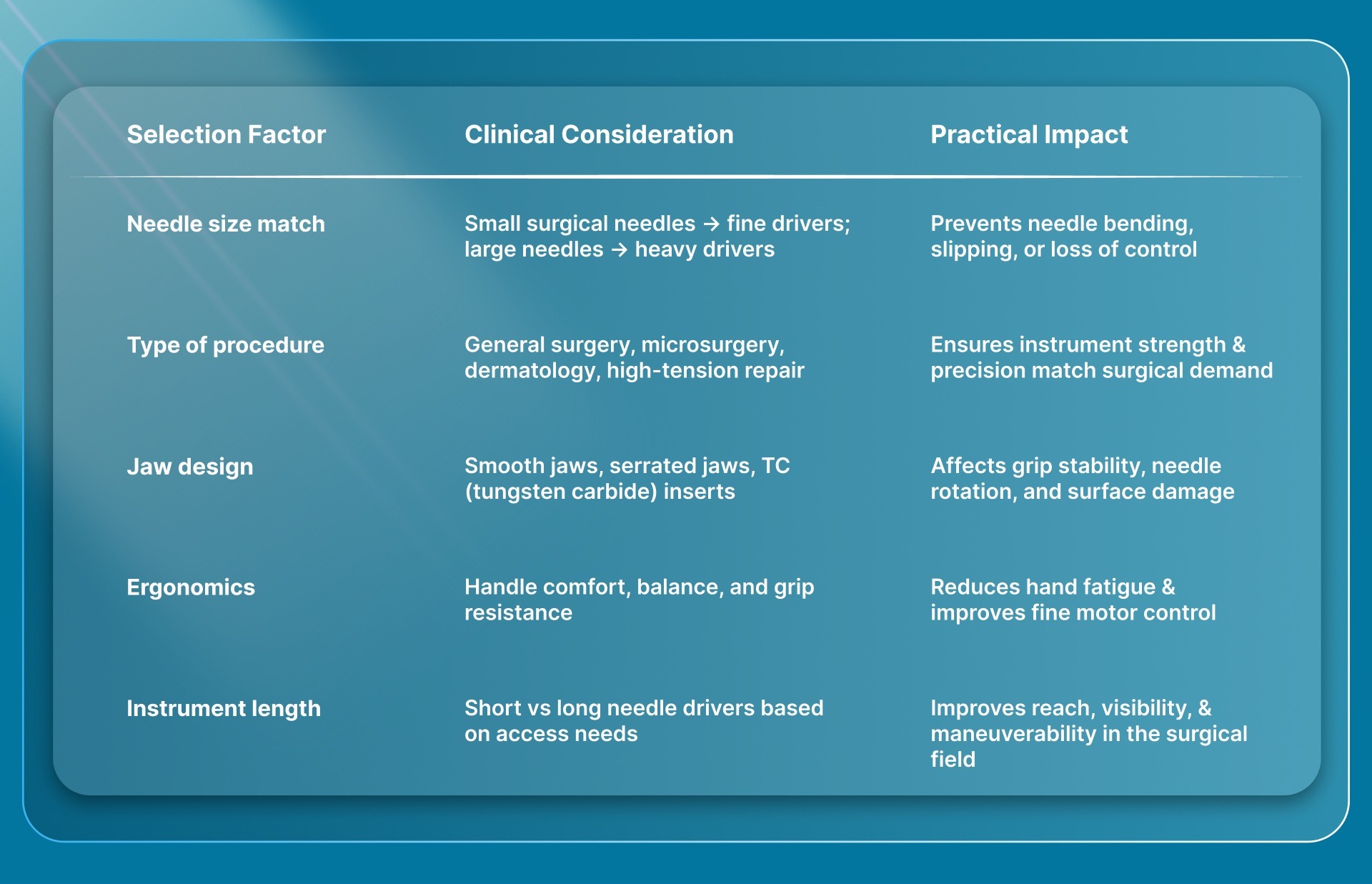
| Selection Factor | Clinical Consideration | Practical Impact |
|---|---|---|
| Needle size match | Small surgical needles → fine drivers; large needles → heavy drivers | Prevents needle bending, slipping, or loss of control |
| Type of procedure | General surgery, microsurgery, dermatology, high-tension repair | Ensures instrument strength and precision match surgical demand |
| Jaw design | Smooth jaws, serrated jaws, TC (tungsten carbide) inserts | Affects grip stability, needle rotation, and surface damage |
| Ergonomics | Handle comfort, balance, and grip resistance | Reduces hand fatigue and improves fine motor control |
| Instrument length | Short vs long needle drivers based on access needs | Improves reach, visibility, and maneuverability in the surgical field |
Final Thoughts
Needle holders translate hand movement into controlled, stable needle delivery through tissue, making them central to achieving accurate and consistent suturing. Their performance is directly dependent on correct selection based on needle size, tissue resistance, and the demands of the procedure, ensuring predictable control during wound closure.
Equally important is functional integrity in routine use. Progressive jaw wear, ratchet loosening, or subtle misalignment can reduce grip security and introduce variability in needle handling. This is why regular inspection and timely servicing or replacement are essential to maintain reliable performance in clinical settings.
For surgical teams looking to improve consistency in suturing practice and optimize wound closure workflows, SubQ It! offers bioabsorbable solutions designed to support controlled handling and improved procedural efficiency across clinical applications.
To explore how SubQ It! can support your surgical practice, connect with the SubQ It! team.
FAQs
1. What is a needle holder used for in surgical suturing?
A needle holder (needle driver) is used to securely grasp and control a suturing needle during wound closure, ensuring stable alignment, controlled passage through tissue, and reduced slippage during suturing.
2. Why is a needle driver important in suturing procedures?
A needle driver improves control of curved suturing needles, helping maintain correct angulation and consistent tissue penetration. This reduces variability in wound closure and supports more precise surgical suturing outcomes.
3. What materials are used to make needle holders?
Most needle holders are manufactured from surgical-grade stainless steel for strength and corrosion resistance. Many also include tungsten carbide inserts in the jaws to improve grip durability and reduce wear over repeated use.
4. How does jaw design affect needle holder performance?
Jaw design directly impacts grip stability. Smooth jaws help minimize needle surface damage, while serrated jaws provide a stronger grip and reduce rotational movement of the needle during suturing.
5. What are the different types of needle holders used in surgery?
Common types include Crile–Wood, Mayo Hegar, Baumgartner, Webster (Halsey), Castroviejo, and Olsen–Hegar needle holders. Each type is selected based on tissue depth, needle size, and required surgical precision.
6. How often should needle holders be inspected in clinical practice?
Needle holders should be inspected after every surgical procedure and before sterilization to check for jaw wear, cracks, misalignment, and ratchet function issues that may affect performance.
7. How is the right needle holder selected for surgery?
Selection is based on needle size, tissue resistance, procedure type, jaw design, ergonomics, and instrument length. Proper matching ensures controlled handling, stable grip, and efficient suturing across surgical settings.
8. Are there alternatives to traditional needle-and-suture closure?
Modern bioabsorbable closure systems like SubQ It! offer an alternative approach that eliminates the need for needle drivers entirely. These disposable devices place subcutaneous fasteners 7X faster than manual sutures while providing superior cosmetic outcomes without requiring removal.