
Suturing is a fundamental part of surgery, and precise needle control directly influences tissue handling and the consistency of closure. Even small variations in grip and stability can affect stitch quality, particularly in multilayer closures.
This emphasis on control is reflected in market growth, with the U.S. needle holders market projected to reach USD 135.0 million by 2030.
In practice, jaw design and ratchet function shape how securely the needle is held and driven through tissue. The Mayo-Hegar needle holder remains widely used for its balance of control and versatility.
In this blog, you’ll examine how surgeons evaluate the Mayo-Hegar needle holder, focusing on design features, grip stability, insert types, and clinical use considerations.
Key Takeaways:
- The Mayo-Hegar needle holder is used for medium-to-heavy suturing, featuring a ratcheted mechanism that maintains a secure, adjustable grip on curved needles.
- The 15 cm variant is commonly used because it provides a balance between reach and control for superficial-to-intermediate-depth procedures.
- Grip and durability depend on the jaw inserts; tungsten carbide inserts improve stability and reduce slippage.
- The Mayo-Hegar needle holder is widely used across general surgery, gynecology, plastic surgery, and outpatient procedures for multilayer wound closure.
- Choosing the right Mayo-Hegar needle holder depends on surgical access, needle size, and suture type, rather than the procedure alone.
What is a Mayo-Hegar Needle Holder?
The Mayo-Hegar needle holder is a ratcheted surgical instrument used to grasp and drive curved suture needles during wound closure. It remains a standard instrument in operating rooms due to its controlled grip and reliable needle handling.
The needle is grasped approximately 1/2 to 1/3 of the distance from the sharp end and held close to the tip (distal end) of the needle holder for controlled handling.
To understand its reliability in clinical settings, it is useful to review its core components and operational features.
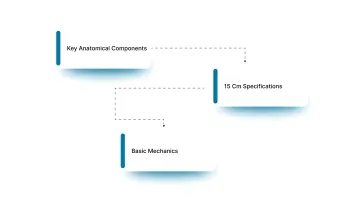
1. Key Anatomical Components
The Mayo-Hegar needle holder is designed to provide stable needle control and consistent application of force during suturing. Each component contributes to precision, grip stability, and reduced surgeon fatigue.
- Ratcheted handles: Locking mechanism maintains a consistent grip without continuous hand pressure
- Box lock joint: Ensures stable alignment of jaws during needle passage
- Serrated jaws: Cross-hatched tips prevent needle slippage and rotation
- Shanks: Provide leverage for controlled needle driving
2. 15 cm Specifications
The 15 cm (6-inch) Mayo-Hegar needle holder is commonly used in general surgical procedures where a balance between reach and control is required.
It is typically manufactured from surgical-grade stainless steel and is compatible with standard sterilization methods.
3. Basic Mechanics
The ratchet mechanism provides controlled, adjustable grip strength based on needle size and tissue resistance. This allows surgeons to maintain a secure hold on the needle without continuous pressure, improving precision during suturing.
Once its design and mechanism are clear, its role in everyday surgical practice becomes easier to appreciate.
4 Primary Uses of Mayo-Hegar Needle Holder
The Mayo-Hegar needle holder is used to grasp curved suture needles and guide them through tissue during wound closure. It is typically held approximately two-thirds of the distance from the tip toward the swage.
This allows controlled tissue penetration while reducing the risk of bending or rotation.
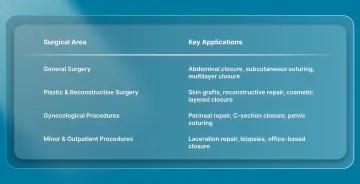
1. General Surgery Applications
The 15 cm Mayo-Hegar is widely used in general surgical procedures requiring reliable needle control across multiple tissue layers. Its design supports efficient handling of standard suture materials used in routine closure.
- Closing abdominal incisions with adequate reach and control
- Managing medium-weight sutures for subcutaneous closure
- Performing multilayer wound closure across varying tissue depths
The instrument’s short, strong jaws allow secure handling of medium to heavier suture needles used in general surgery.
2. Plastic and Reconstructive Surgery
In plastic and reconstructive procedures, the Mayo-Hegar is used for controlled suturing where moderate suture sizes are required. It supports tasks that demand stability rather than ultra-fine precision.
- Securing skin grafts with controlled tension
- Performing reconstructive repairs using intermediate sutures
- Supporting layered closure in cosmetic procedures
For highly delicate cosmetic suturing, finer needle holders are often preferred for enhanced precision.
3. Gynecological Procedures
The Mayo-Hegar is commonly used in gynecological surgery for routine tissue approximation across different procedural contexts. Its length allows access while maintaining controlled needle handling.
- Perineal repair following delivery
- Cesarean section closure across multiple tissue layers
- Pelvic procedures requiring controlled suturing
The 15 cm length provides sufficient reach while maintaining visibility and precision in confined operative fields.
4. Minor Surgical and Outpatient Procedures
The 15 cm Mayo-Hegar is well-suited for outpatient and minor procedures requiring controlled suturing in smaller operative fields.
- Laceration repair in emergency settings
- Closure following excisional biopsies
- Office-based wound closure procedures
Once deeper layers are approximated, the focus moves to skin closure, where consistency and follow-up requirements come into play.
For smaller incisions in outpatient or biopsy settings, SubQ It! SU-10 enables subcutaneous closure of incisions up to 10 cm using bioabsorbable fasteners, removing the need for staple removal.
These common applications also highlight why it is often compared with other needle holder designs used in similar settings.
How Do Mayo-Hegar Needle Holders Compare With Other Needle Holders?
Needle holder selection directly affects how precisely you control the needle, manage tissue resistance, and maintain consistency during suturing.
Comparing the Mayo-Hegar with other designs highlights how differences in grip mechanism, jaw structure, and workflow impact performance across surgical scenarios.
1. Standard Mayo-Hegar Configurations
The Mayo-Hegar needle holder is available in multiple configurations designed to accommodate different needle types and surgical environments. These variations primarily involve jaw surface design and instrument length.
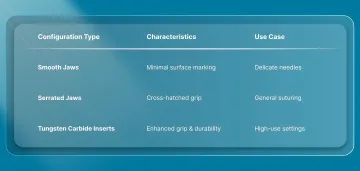
- Smooth jaws: Used for delicate needles where minimal surface marking is required
- Serrated jaws: Cross-hatched pattern provides a secure grip for general suturing
- Tungsten carbide inserts: Enhance grip strength and durability; gold handles indicate TC inserts
2. Mayo-Hegar vs Olsen-Hegar
The Olsen-Hegar combines a needle holder with integrated scissors positioned behind the jaws. This allows surgeons to grasp the needle and cut sutures without changing instruments.
- Primary advantage: Reduced instrument exchange during continuous suturing
- Best use case: Procedures requiring frequent suture cutting
The Mayo-Hegar remains preferred when separate scissors allow greater control and precision during suturing.
3. Mayo-Hegar vs Crile-Wood
The Crile-Wood needle holder is designed for finer suturing tasks using smaller needles and lighter suture materials.
- Crile-Wood: Narrower jaws for improved precision with small to medium needles
- Mayo-Hegar: Stronger jaws suited for medium to heavy needles and general tissue closure
Surgeons select between the two based on needle size and the level of control required during suturing.
4. Mayo-Hegar vs Mathieu
The Mathieu needle holder features a spring-loaded, palm-grip handle with a ratchet-locking mechanism. This allows rapid, repetitive needle handling with minimal finger repositioning.
- Mayo-Hegar: Finger-ring design with sustained, adjustable grip
- Mathieu: Palm-grip design suited for quick, repetitive suturing
Mathieu is often preferred for procedures requiring speed, while Mayo-Hegar is selected for controlled, consistent needle handling across a wider range of suturing tasks.
After evaluating the differences, attention turns to identifying the most appropriate Mayo-Hegar model for specific surgical needs.
How to Choose the Right Mayo-Hegar Needle Holder?
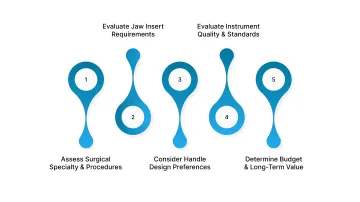
Selecting the appropriate Mayo-Hegar needle holder depends on surgical access, needle size, and the type of tissue being sutured. The following factors help guide selection based on clinical use and instrument performance.
1. Assess Your Surgical Specialty and Typical Procedures
Match instrument characteristics to the type of suturing performed. Needle holder selection should align with needle size, suture type, and surgical field access, rather than be driven by fixed procedural rules.
2. Evaluate Jaw Insert Requirements
Jaw inserts influence grip strength, durability, and needle control during suturing:
- Monofilament sutures: Smoother surfaces increase slippage risk; TC inserts improve grip stability
- Needle gauge: Larger needles require stronger jaw surfaces
- Procedure volume: TC inserts offer longer service life in high-use settings
- Cost considerations: Higher initial cost, but improved durability
Tungsten carbide inserts improve grip consistency and reduce slippage, but needle integrity still depends on proper clamping force and handling technique.
3. Consider Handle Design Preferences
Handle design affects comfort and control during extended procedures:
- Standard ring handles: Familiar design with reliable control
- Ergonomic variations: Designed to reduce hand strain but may require adaptation
Handle size should match the surgeon's preference and glove size to maintain precision during suturing.
4. Evaluate Instrument Quality and Manufacturer Standards
Quality affects durability, sterilization performance, and long-term reliability:
- Consistent jaw alignment and ratchet function
- Resistance to wear after repeated sterilization cycles
- Manufacturer reputation and peer feedback
Warranty terms vary by manufacturer and should be evaluated alongside instrument quality.
5. Determine Budget and Long-Term Value
Evaluate cost based on total usage rather than purchase price:
- Initial cost varies by material and manufacturing quality
- TC (Tungsten Carbide) inserts offer improved durability and a longer lifespan
- Replacement frequency impacts long-term cost
Final Thoughts
Choosing the right needle holder influences more than just needle control. It shapes suturing consistency, tissue handling, and the reliability of closure across procedures.
As surgical workflows increasingly emphasize efficiency and predictable outcomes, the final stage of closure becomes equally important.
In this context, SubQ It! SU-10 places 10 bioabsorbable fasteners beneath the skin to close incisions up to 10 cm in length, supporting consistent subcutaneous approximation without the need for staple removal.
Contact us to explore how SubQ It! SU-10 can support your closure workflow, improving procedural efficiency and patient outcomes.
FAQs
1. What is a Mayo-Hegar needle holder used for?
The Mayo-Hegar is used to grasp and control curved suture needles during wound closure. Its ratcheted locking mechanism maintains a secure grip, allowing precise needle placement without continuous hand pressure.
2. What is the difference between Mayo-Hegar and Olsen-Hegar needle holders?
The Olsen-Hegar combines a needle holder with integrated scissors, allowing suturing and cutting without changing instruments. The Mayo-Hegar is dedicated to needle control, offering more stable and precise handling during suturing.
3. What is the difference between Mayo-Hegar and Crile-Wood needle holders?
The Crile-Wood has narrower, more delicate jaws designed for finer needles and lighter sutures. The Mayo-Hegar has stronger jaws, suited for medium- to heavy-needles used in general tissue closure.
4. What are the different types of needle holders?
Main needle holder types include:
- Mayo-Hegar: Standard ratcheted design for general surgery
- Olsen-Hegar: Integrated scissors for continuous suturing
- Crile-Wood: Delicate jaws for fine surgical work
- Mathieu: Spring-loaded palm grip for rapid suturing
- Webster: Micro-surgery instrument for 7/0 and finer sutures
- Castroviejo: Specialized for ophthalmic and microsurgical procedures
5. What is a Mathieu needle holder used for?
The Mathieu needle holder is used for rapid suturing, where a palm-grip design improves speed and control. It features a spring-loaded handle with a ratchet mechanism, allowing quick locking and release during repetitive suturing.
6. What is a Nidal holder used for?
“Nidal holder” is not recognized in standard surgical terminology. It may refer to a misspelling or a brand-specific instrument and should be verified with the supplier.