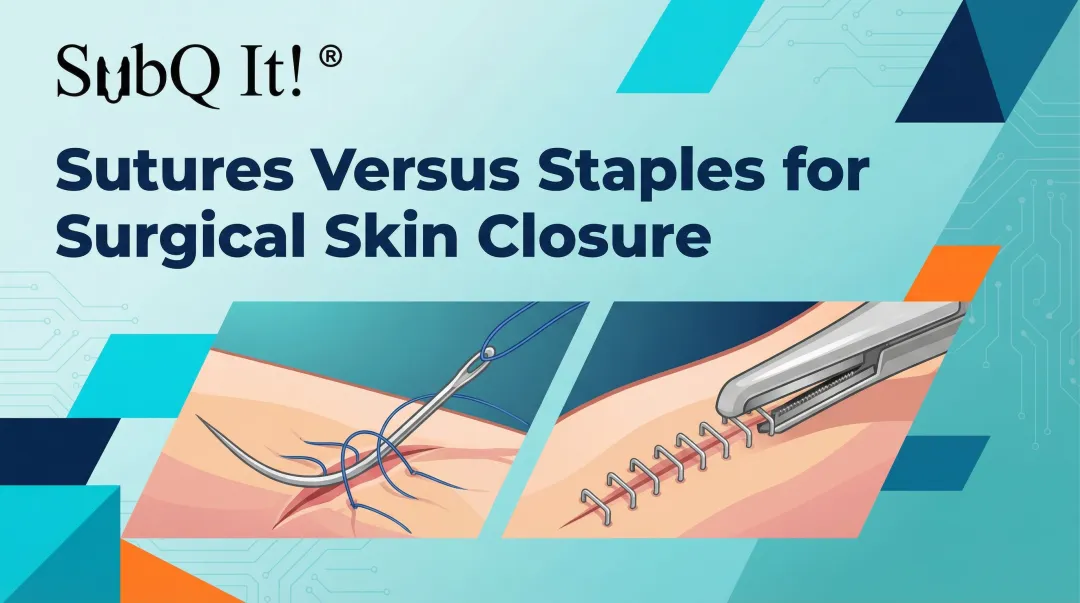
Wound closure is a small part of the surgical workflow, but it has a disproportionate impact on outcomes. The method used can affect operative efficiency, infection risk, wound stability, and scar quality, all of which influence recovery beyond the operating room.
In practice, this decision usually comes down to stapler vs suture. The choice is shaped by real constraints: tissue characteristics, incision type, time in the OR, and the level of control required during closure. What improves speed in one scenario may introduce trade-offs in another.
Rather than treating one approach as superior, surgeons evaluate what the procedure demands. Some cases prioritize consistency and time efficiency; others require precise tension control and adaptability.
This blog breaks down the stapler vs suture comparison across key factors—so the choice is driven by context, not habit.
TL;DR
- Closure method impacts outcomes more than it seems, affecting OR time, infection risk, wound stability, and scarring.
- Stapler vs suture isn’t a “better vs worse” choice; it’s driven by tissue type, incision shape, and surgical priorities.
- Staplers optimize speed and consistency, ideal for long, linear incisions and time-sensitive procedures.
- Sutures offer precision and control better suited for complex, cosmetic, or layered closures.
- Clinical outcomes are often comparable; the real difference lies in execution, context, and trade-offs.
What is a Surgical Suture?
Sutures are widely used in surgical wound closure to approximate tissue edges and support healing under controlled mechanical tension. Their selection is guided by tissue type, healing time, and required strength retention.
Suture materials are broadly classified based on how they behave in the body.
- They may be absorbable or non-absorbable, depending on whether they degrade after implantation or remain intact for long-term support.
- They may also be natural or synthetic, which influences tissue reaction and handling characteristics.
- Structurally, sutures are either monofilament or multifilament (braided), affecting flexibility, knot security, and infection risk.
Absorbable sutures gradually lose tensile strength as healing progresses.
- Breakdown occurs through enzymatic digestion (natural materials) or hydrolysis (synthetic polymers)
- They are commonly used in internal tissues where removal is not feasible
- Designed for short- to medium-term wound support depending on material type
Non-absorbable sutures remain relatively stable after implantation.
- They are chosen when prolonged or permanent tissue support is required
- Often used in skin closure or high-tension structures
- May require later removal depending on location and clinical context
From a clinical standpoint, sutures are selected not as a single uniform material, but as a category of engineered options, each designed to balance strength retention, tissue response, and handling properties.
What is a Surgical Stapler?
A surgical stapler is a mechanical device used to approximate and close tissue edges using rows of sterile metal staples. In contrast to manual suturing, staplers deliver pre-formed staples in a single, controlled action, allowing rapid and consistent wound closure, particularly in linear or long incisions.
As described in surgical literature, stapling systems are widely used in both open and minimally invasive procedures due to their efficiency and reproducibility in tissue approximation, especially where speed and uniformity are clinically important
Surgical staplers generally fall into two broad categories:
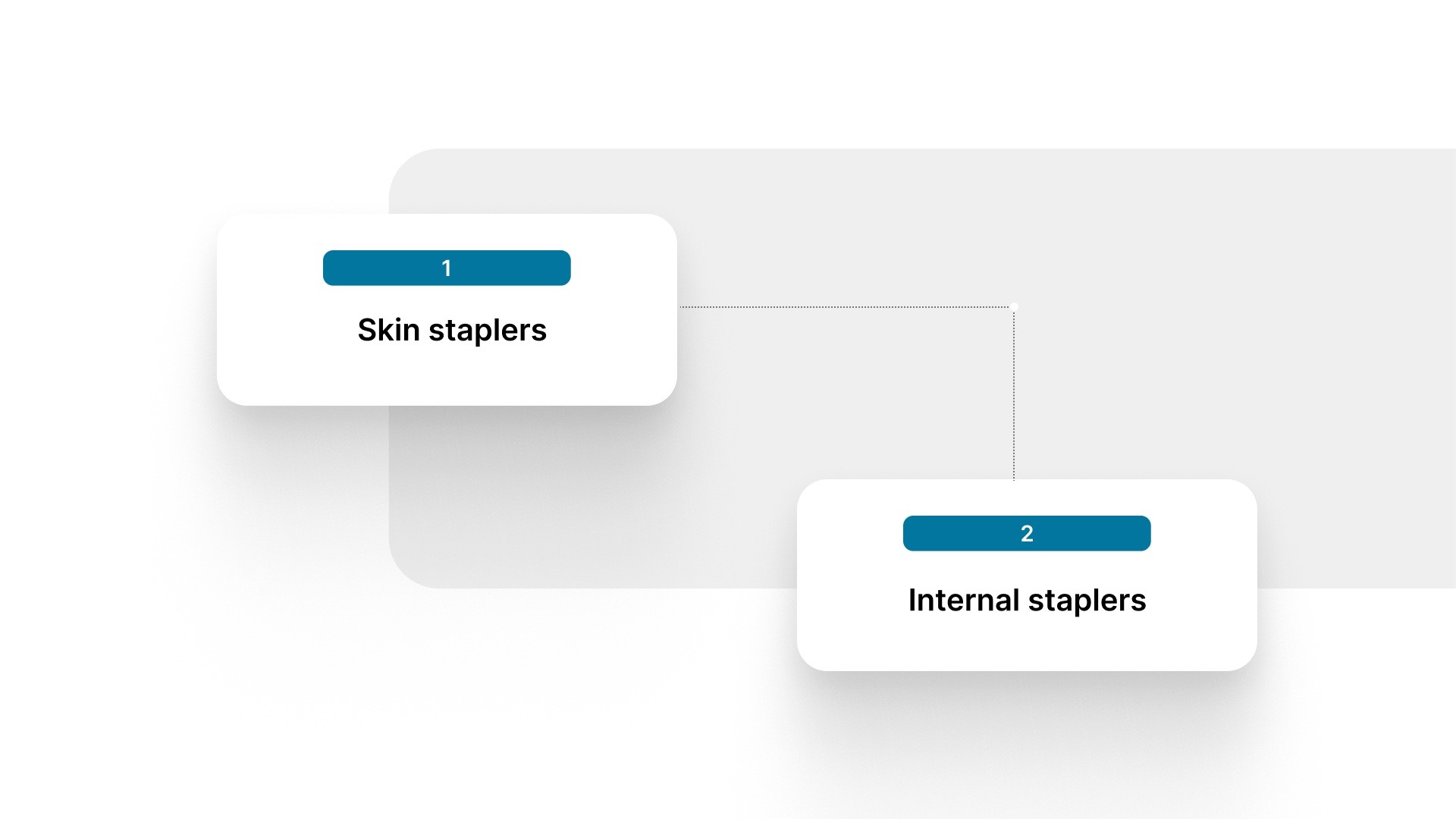
- Skin staplers are used for external wound closure
- Internal staplers (e.g., linear or cutting staplers), used in organ and tissue resection or anastomosis
Mechanically, the device drives staples through tissue while simultaneously bending them into a secure closed configuration, ensuring edge apposition with minimal handling. This reduces the number of manual steps required compared to suturing.
5 Practical Differences Surgeons Weigh: Stapler vs Suture
Both staplers and sutures are widely used for wound closure, and the choice depends on the surgical site and clinical need. Instead of a “better vs worse” comparison, it’s more about how each performs in specific conditions.
Here are the key differences in practical use:
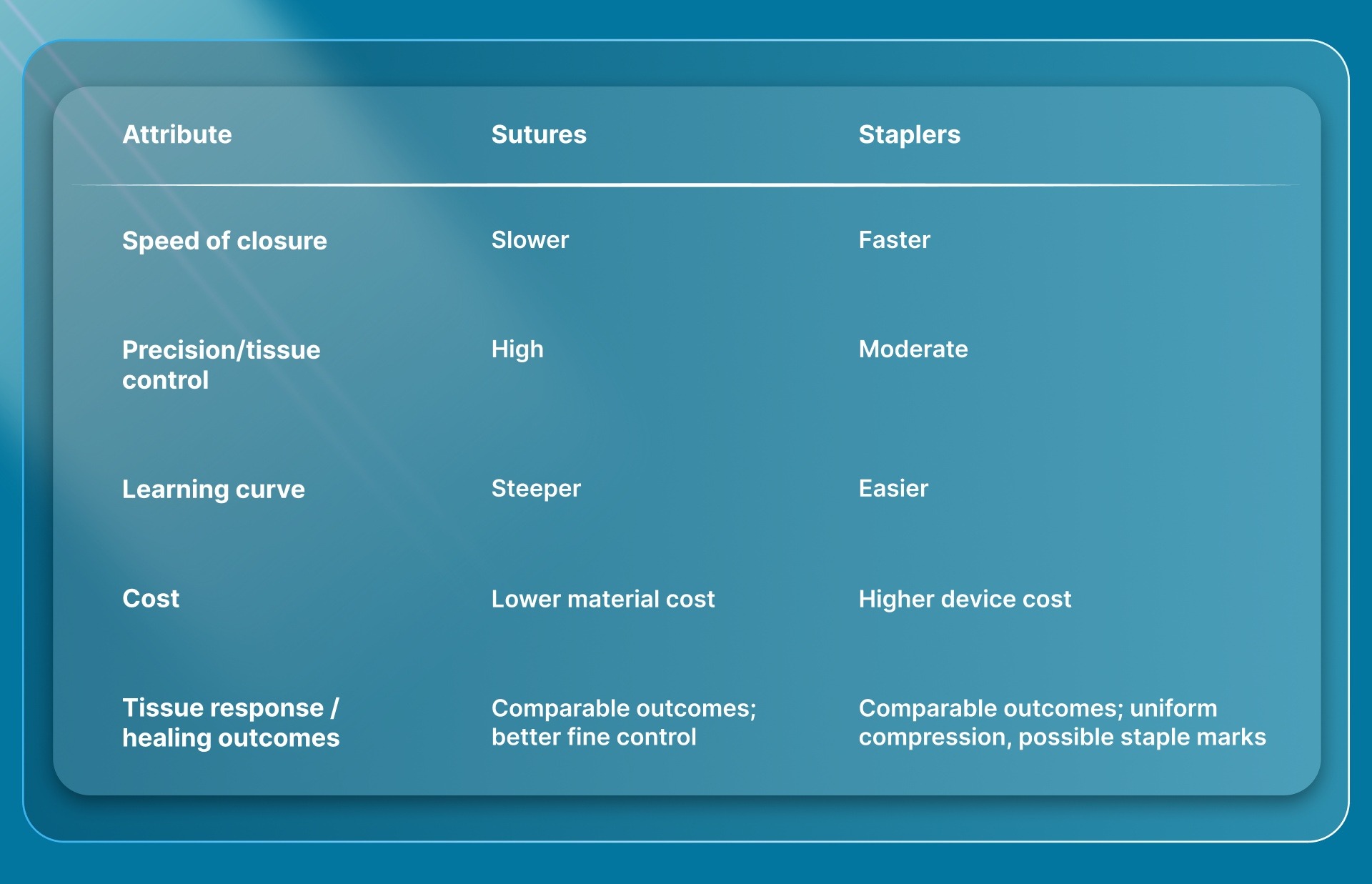
1. Speed of Closure
Staplers significantly reduce closure time compared to sutures. In clinical evaluations, skin stapling has been shown to be approximately 4–5 times faster than manual suturing, particularly in long incisions. This time efficiency is especially relevant in:
- Emergency trauma surgery
- Large abdominal or thoracic incisions
- Procedures where minimizing anesthesia time is critical
Suturing, while slower, allows incremental control over each point of tissue approximation.
2. Precision and Tissue Control
Sutures provide finer control over wound edge alignment and tension distribution. This makes them more suitable for:
- Irregular or curved wound edges
- Areas requiring layered closure
- High-precision anatomical zones (e.g., face, hand, perineum)
Staplers deliver uniform closure but with less adaptability. Once fired, adjustment is limited, which can be a constraint in complex wound geometries.
3. Learning Curve and Technical Dependence
Suturing is a skill-intensive technique that depends on the surgeon's experience for consistency in:
- Needle angle and depth
- Tension control
- Knot security
Stapler use is comparatively standardized. Device mechanics reduce variability between operators, allowing more consistent application, particularly in high-volume or time-sensitive settings.
4. Cost Considerations
Cost dynamics differ beyond just device price:
- Staplers: Higher disposable cost per unit, but reduce operative time and potentially lower anesthesia and theatre utilization costs.
- Sutures: Lower material cost, but longer closure time may increase overall procedural resource use.
Economic preference often depends on institutional workflow rather than device cost alone.
5. Tissue Response, Healing, and Outcomes
Evidence suggests that both staplers and sutures achieve comparable healing and cosmetic outcomes in many surgical settings when appropriately used. Some studies report:
- Similar long-term cosmetic results between methods
- Comparable infection rates depending on context
- Slight differences in early wound irritation or comfort
However, tissue interaction differs mechanically:
- Sutures distribute tension along a continuous thread
- Staples apply discrete, evenly spaced points of compression
These biomechanical differences may influence surgeon preference in specific tissue types, even when final outcomes are similar.
When Do Surgeons Prefer Sutures?
Sutures are typically chosen when the priority is precision, tissue control, and structured healing, rather than speed.
Below is how that decision plays out in practice:
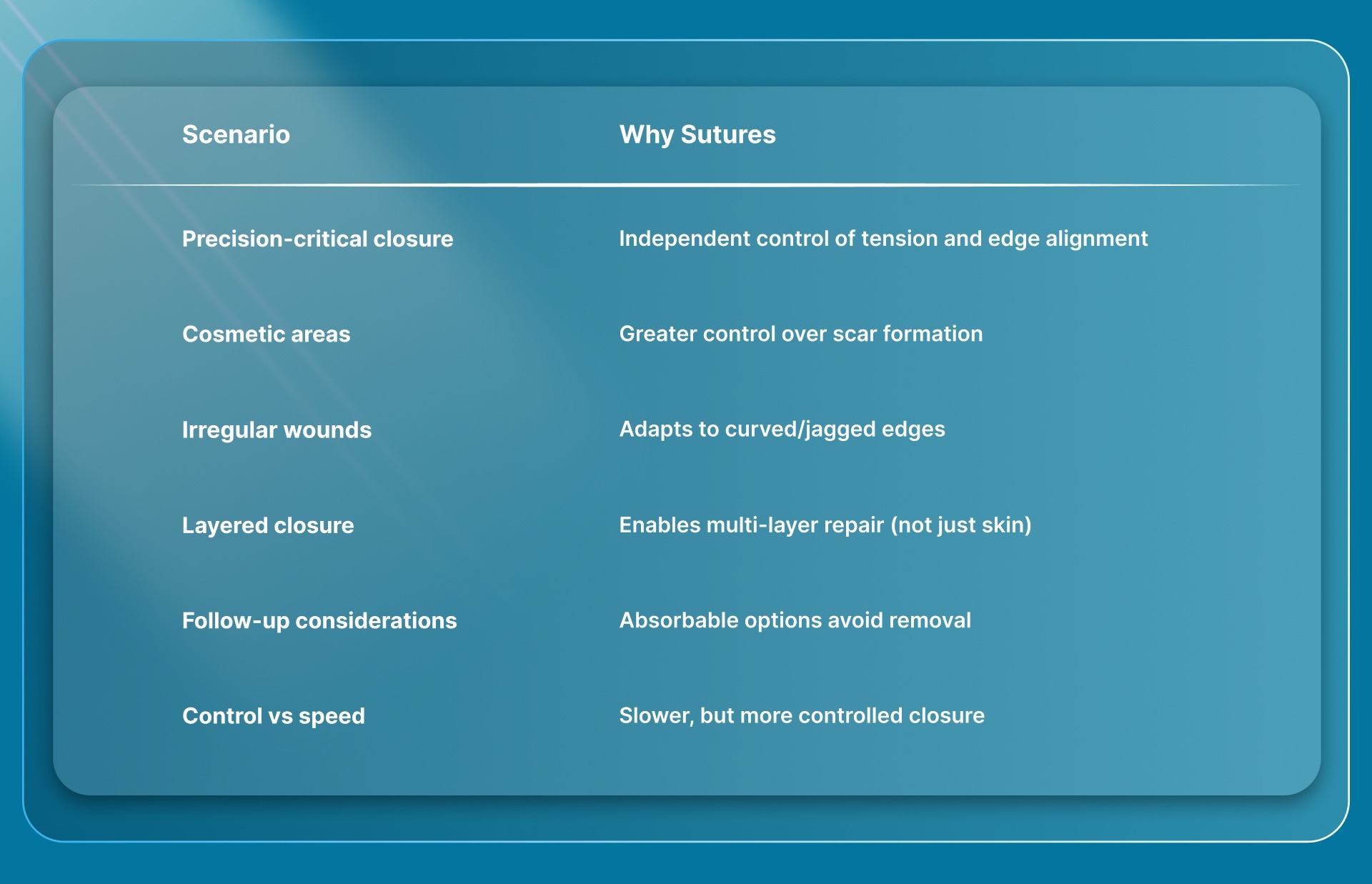
1. Where precision outweighs speed
Sutures allow fine control over edge approximation and tension, which directly influences healing quality.
- Each stitch can be adjusted independently
- Tension can be redistributed along the wound
- Edge alignment can be refined in real time
This becomes critical in surgeries where even slight misalignment can affect function or aesthetics.
2. Cosmetically sensitive areas
In regions where scar quality matters, sutures are often the default—not because outcomes are always statistically superior, but because they offer greater predictability.
- Face, neck, and exposed skin
- Plastic and reconstructive procedures
- Low-margin-for-error closures
Evidence suggests cosmetic outcomes can be comparable, but sutures tend to provide more consistent aesthetic control.
3. Irregular or non-linear wounds
Staplers are optimized for straight, uniform incisions. Sutures, by contrast, adapt to complexity.
- Curved or jagged wound edges
- Variable tissue thickness
- Asymmetric tension zones
This adaptability is one of the main reasons sutures remain widely used across surgical specialties.
4. When a layered (multi-depth) closure is required
Unlike staples, sutures can be placed at multiple tissue levels: skin, subcutaneous tissue, and fascia, ensuring structural stability.
- Internal tissue approximation
- Reduced dead space
- Lower risk of dehiscence in deeper wounds
Suturing is fundamentally designed for primary repair of both superficial and deeper layers, not just surface closure.
5. When patient comfort and follow-up matter
Some clinical data indicate staples may be associated with higher postoperative pain in certain cases, while sutures, especially absorbable ones, can reduce the need for removal.
- No removal required (absorbable sutures)
- Less procedural discomfort during follow-up
- Better suited for patients with limited access to care
6. When surgical control is prioritized over efficiency
Staples are faster, often by several minutes per closure, but sutures allow continuous intraoperative decision-making.
- Adjustments based on tissue response
- Customization for each segment of the wound
- Greater technical flexibility
When Do Surgeons Prefer Staplers?
Staplers are preferred when the priority is speed, consistency, and procedural efficiency, particularly in standardized or time-sensitive surgeries.
Below is how that decision plays out in practice:
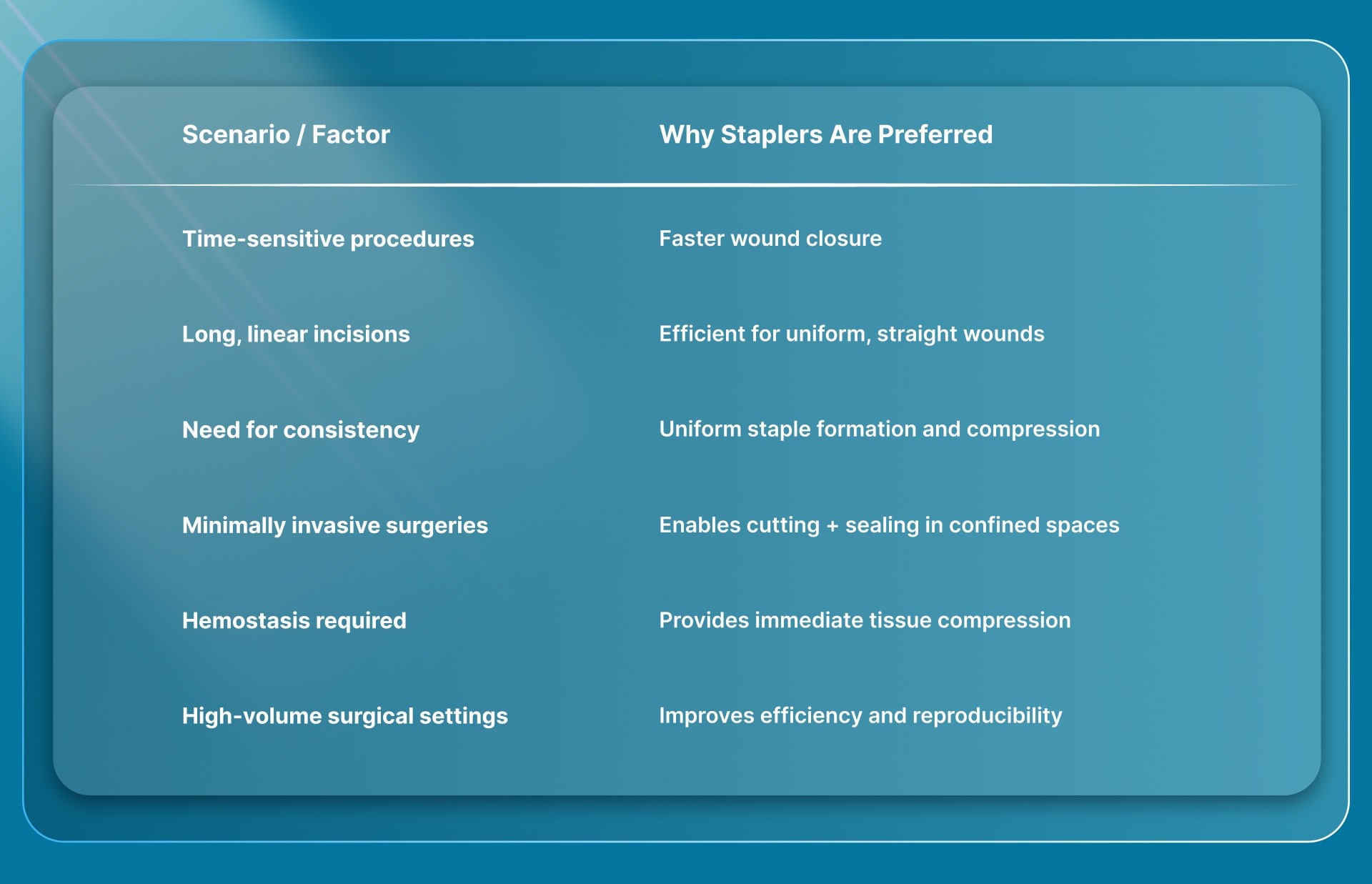
1. When operative time directly impacts outcomes
Staplers significantly reduce closure time compared to sutures.
- Closure can be 3× faster in clinical settings
- Reduces total anesthesia exposure
- Particularly valuable in trauma and long procedures
Clinical studies show stapler closure taking ~77 seconds vs ~277 seconds with sutures in comparable cases.
2. For long, linear, and uniform incisions
Staplers are designed for predictable wound geometry, where consistency matters more than customization.
- Abdominal and orthopedic incisions
- Trunk and extremity wounds
- Scalp closures
They allow rapid, even approximation across extended incision lines with minimal variation between placements.
3. When standardization improves surgical outcomes
Mechanical staplers deliver uniform staple formation and compression, reducing variability.
- Consistent staple depth and spacing
- Reduced operator-dependent variation
- More reproducible outcomes across cases
This standardization is one reason staplers are widely used in gastrointestinal anastomosis today.
4. In minimally invasive and internal procedures
Staplers are essential in surgeries where manual suturing is technically limited.
- Laparoscopic and robotic surgeries
- Gastrointestinal reconstructions
- Thoracic procedures
They enable simultaneous cutting and sealing, making them integral to minimally invasive workflows.
5. When hemostasis needs to be immediate and reliable
Staplers compress tissue during deployment, supporting instant hemostasis.
- Reduces intraoperative bleeding
- Maintains a clearer surgical field
- Useful in vascular or highly perfused tissues
Meta-analyses also show reduced leakage and bleeding-related complications in stapled procedures.
6. In high-volume or repetitive surgical settings
Staplers are preferred where efficiency and reproducibility are critical.
- Standardized procedures
- High-throughput operating rooms
- Training environments
They reduce surgeon fatigue and procedural variability while maintaining consistent closure quality.
SubQ It!: A Smarter Take on Surgical Skin Closure
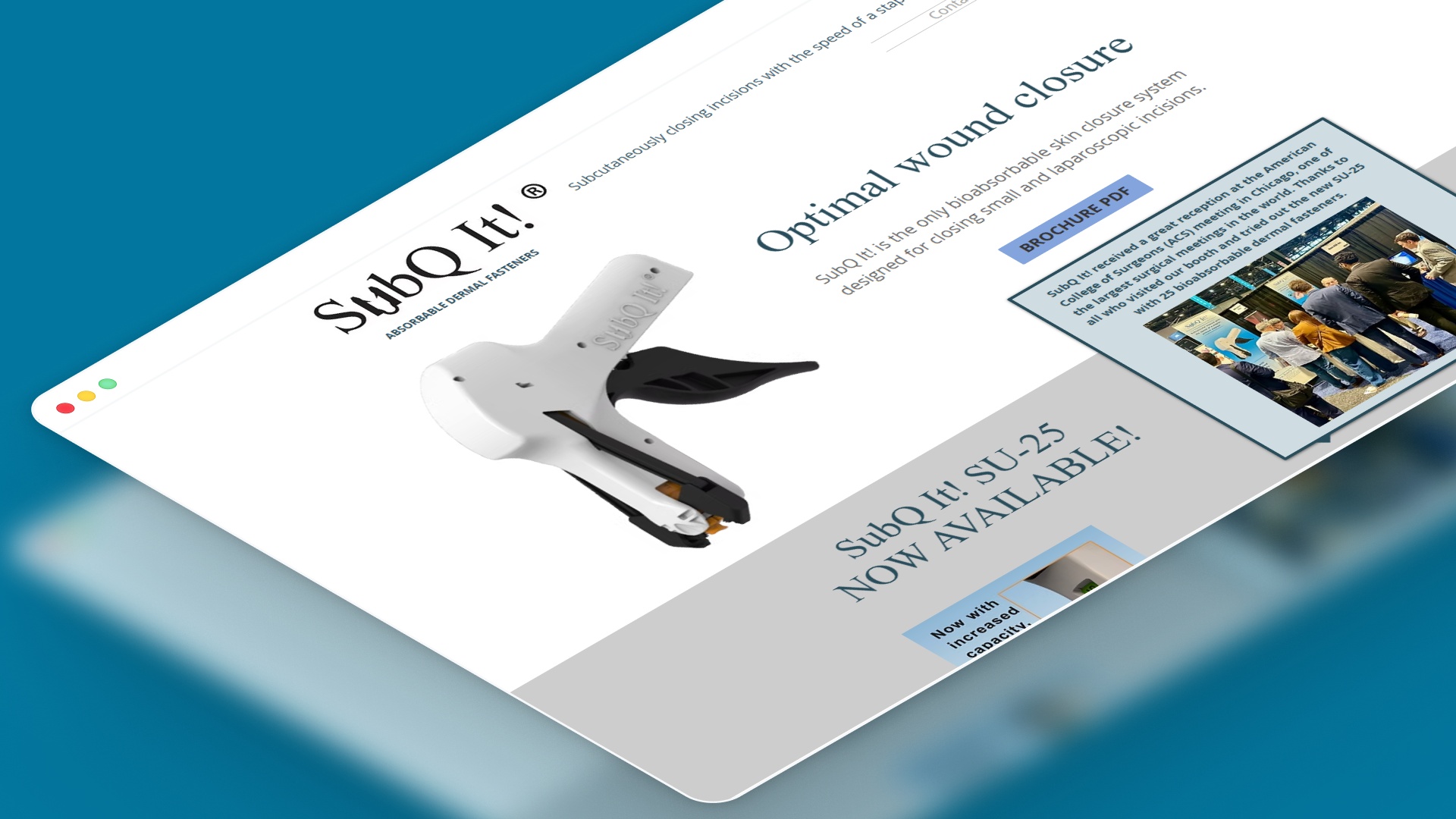
Traditional metal staples offer speed, but come with trade-offs, external placement, mandatory removal after 7–10 days, and the risk of visible “railroad-track” scarring. SubQ It! shifts the approach by using bioabsorbable subcutaneous fasteners, eliminating removal while supporting improved cosmetic outcomes.
- Bioabsorbable, subcutaneous closure: Fasteners are placed beneath the skin and gradually dissolve during healing. This removes the need for removal visits and minimizes surface-level trauma.
- Adaptable across incision types: The vertical subcuticular placement allows use across a range of incision lengths, including very small laparoscopic entry points.
- Lower post-operative burden: By eliminating staple removal, it improves patient comfort and simplifies follow-up care.
- Cost vs. workflow balance: With an estimated per-use cost of ~$60–$100, the value lies in reduced procedure time and fewer follow-up visits—factors that can offset costs in busy surgical workflows.
Built for procedural efficiency
- SubQ It 10: suitable for closures up to 10 cm, ideal for smaller or laparoscopic incisions
- SubQ It 25: supports closures up to 25 cm, enabling faster management of longer incisions. This can help streamline closure time, particularly in high-volume operating settings.
Final Thoughts
The stapler vs suture choice works best when aligned with the procedure, not habit. Staplers bring speed and consistency in predictable cases, while sutures offer precision and control for complex or cosmetic closures.
Outcomes, however, depend on more than the method. Tissue handling, tension, wound geometry, and post-op care all shape healing and scar quality. The trade-offs—speed vs. control, efficiency vs. adaptability — should guide case-by-case decisions.
For teams aiming to balance efficiency with patient experience, bioabsorbable subcuticular systems like SubQ It! offer a practical alternative. By eliminating removal and reducing surface trauma, they help streamline closure without adding follow-up burden.
Reach out to the SubQ It! team to explore how it can support your surgical practice.
Frequently Asked Questions
1. Are surgical staples better than sutures for wound closure?
Surgical staples are faster to apply, making them ideal for time-sensitive procedures. However, there is no clear overall superiority between staples and sutures in wound healing outcomes. The choice depends on surgical context, tissue type, and surgeon preference rather than one method being universally better.
2. Do sutures reduce infection risk compared to staples?
Yes, multiple studies suggest sutures may have a lower risk of surgical site infections (SSIs) in certain procedures. For example, a large study found staples were associated with 57% higher odds of infection compared to sutures. However, results can vary across surgical types.
3. Which method is faster: stapler or suture?
Surgical staplers are significantly faster than sutures, often reducing closure time by several minutes. This efficiency is crucial in long or emergency surgeries, where minimizing anesthesia time can improve patient safety and operating room efficiency.
4. Do staples cause more complications than sutures?
Staples can be linked to higher complication rates, including increased chances of returning to the operating room and longer hospital stays. However, these outcomes depend on procedure type and patient condition.
5. Which leaves less scarring: staples or sutures?
Sutures generally provide better cosmetic outcomes, especially in visible areas. Evidence suggests patients report higher satisfaction with scar appearance when sutures are used, although long-term differences may be minimal depending on healing conditions.
6. Are staples more painful than sutures?
Research indicates that staples may be associated with slightly higher postoperative pain compared to sutures. However, the difference is not always significant and can vary depending on surgical technique and patient sensitivity.
7. When do surgeons choose staples over sutures?
Surgeons typically prefer staples when speed, consistency, and efficiency are critical, such as in orthopedic, abdominal, or vascular surgeries. Sutures are preferred for precision, flexibility, and cosmetic outcomes, particularly in delicate or visible areas.