Wound closure outcomes depend on aligning device capabilities with surgical requirements, not routine preference. Factors such as tissue tension, wound depth, contamination risk, and anatomical location determine whether healing is stable or complicated by dehiscence, infection, or poor cosmetic results.
The surgical closure market is projected to grow at ~9.96% annually through 2032, driven by demand for faster workflows and improved outcomes. This growth reflects increased adoption of adhesive technologies (cyanoacrylates, fibrin sealants) alongside mechanical systems (including bioabsorbable staplers).
Closure selection remains a critical decision point. The right approach supports effective sealing, precise approximation, minimal scarring, and reduced follow-up, while poor selection increases complications and cost.
This blog examines surgical glue bands, focusing on their mechanism of action, indications, and limitations in clinical practice.
TLDR
- Surgical skin adhesives bond wound edges chemically without mechanical closure devices
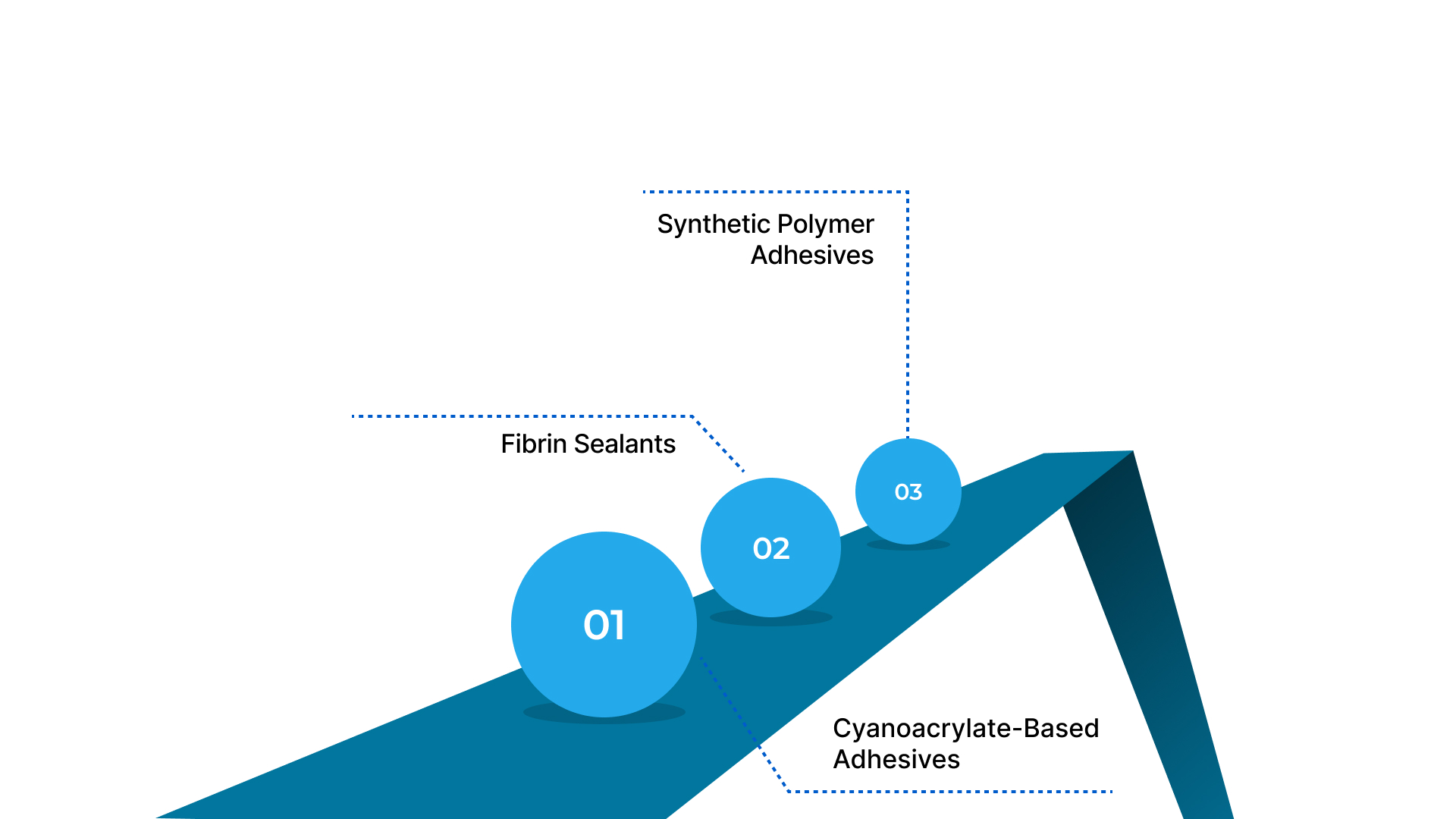
- Main types include cyanoacrylates, fibrin sealants, and synthetic polymer alternatives
- Selection depends on wound tension, location, vascularity, speed needs, and cosmetic goals
- Proper selection reduces complications, eliminates removal visits, and improves patient comfort
- Understanding contraindications prevents adhesive failure and wound dehiscence
What Are Surgical Skin Adhesives?
Surgical skin adhesives are liquid or gel formulations that create chemical bonds to hold wound edges together during healing. Unlike sutures that mechanically bring tissue together through thread tension or staples that clamp skin edges, adhesives polymerize on contact with skin moisture to form a protective barrier film.
Different closure methods work through distinct mechanisms:
- Sutures bring tissue together through tied knots
- Staples compress tissue between metal points
- Bioabsorbable fasteners (like SubQ It!) create subcutaneous closures without piercing external skin
- Adhesives form molecular bonds with the stratum corneum
The chemical bonding approach eliminates removal procedures and provides an immediate waterproof barrier.
3 Core Types of Surgical Skin Adhesives
Understanding each adhesive type helps match the right product to your surgical context.
1. Cyanoacrylate-Based Adhesives
2-octyl cyanoacrylate represents the most widely adopted topical surgical adhesive. The liquid monomer polymerizes within seconds upon contact with anionic substances (water, blood) on the skin surface.
- Form a strong, protective film over wound edges
- Provide high tensile strength and microbial barrier properties
- Best suited for topical, low-tension wounds
2. Fibrin Sealants
These biological adhesives mimic the final stage of the coagulation cascade by combining human fibrinogen and thrombin to form fibrin clots. Common applications include:
- Hemostasis during surgery
- Internal tissue sealing
- Adjunct to sutures in vascular procedures
Absorption timeline: The fibrin matrix biodegrades and resorbs within 10-14 days. Tensile strength is lower than that of cyanoacrylates, making fibrin sealants better suited for internal applications rather than primary skin closure under tension.
3. Synthetic Polymer Adhesives (PEG, Polyurethane)
Engineered systems designed to improve flexibility and control.
- Form hydrogels with tunable mechanical properties
- Adapt better to tissue movement compared to rigid adhesives
- Include materials such as PEG, polyurethane, and albumin-based systems
Selection depends on the surgical context, with topical cyanoacrylates dominating skin closure applications.
4 Major Benefits of Surgical Skin Adhesives
When appropriately selected, surgical skin adhesives offer several practical advantages:
- Faster closure: Randomized trials show significantly reduced closure time compared to sutures (e.g., ~2.5 vs 6 minutes in laparoscopic port sites)
- Improved patient comfort: Lower pain and no need for suture removal improve patient experience
- Protective barrier: Forms a water-resistant film that supports early mobilization and wound protection
- Comparable cosmetic outcomes: Studies show similar long-term scar appearance to sutures in low-tension wounds
However, outcomes remain case-dependent, with no clear superiority over sutures in infection or dehiscence rates.
What to Consider When Choosing the Best Surgical Skin Adhesive?
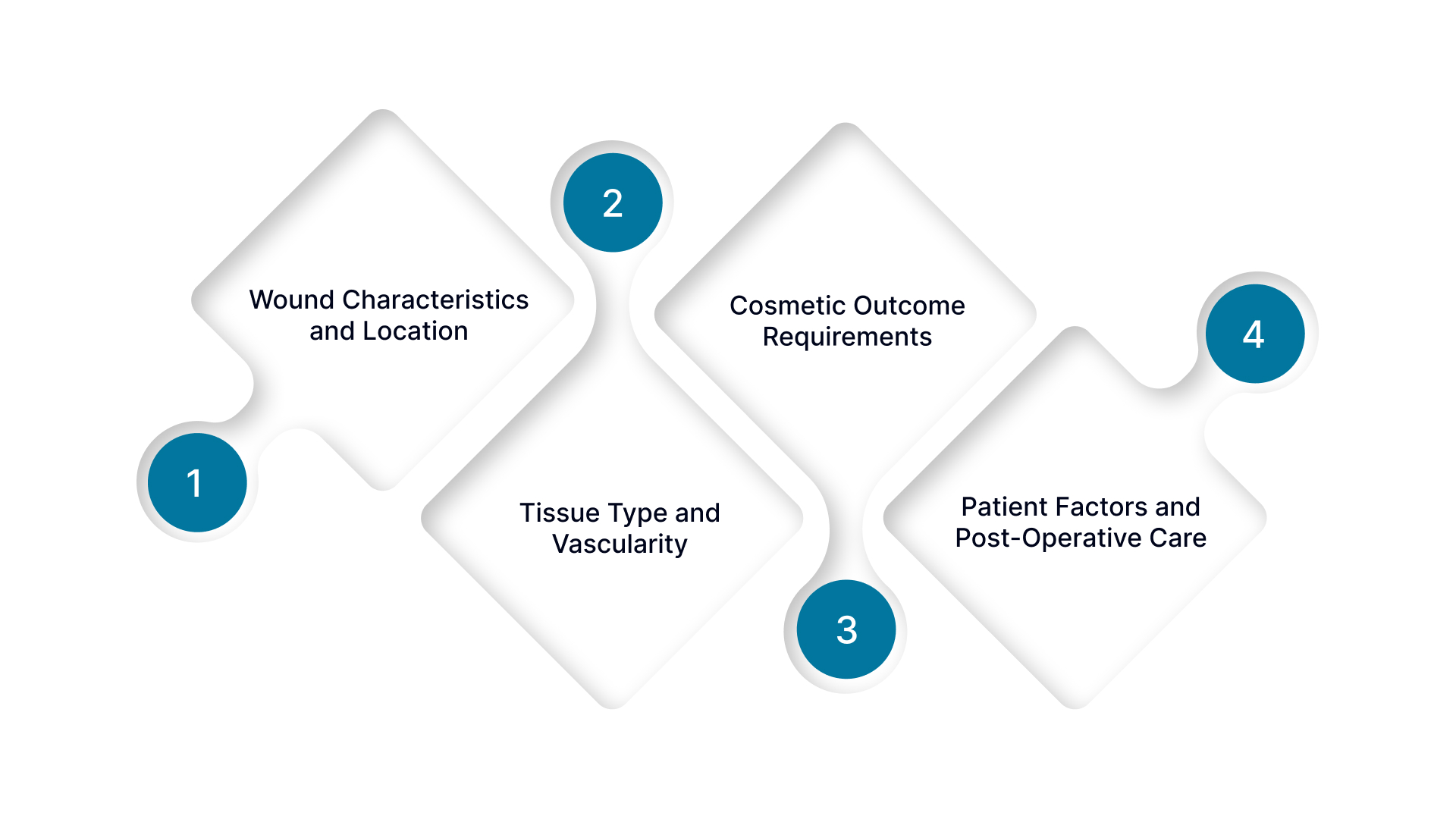
Optimal adhesive selection requires matching product characteristics to wound mechanics, tissue biology, and procedural goals. The following criteria connect technical specifications to measurable outcomes.
Wound Characteristics and Location
Tension assessment is the single most critical factor. Low-tension areas (face, abdomen) tolerate adhesive-only closure, while high-tension sites (joints, back) risk wound reopening without support.
Subcutaneous sutures are recommended when:
- Wounds exceed ~3 cm
- Skin edges do not approximate naturally
- Closure occurs in mobile or high-stress areas
Deep dermal sutures reduce mechanical load, preventing adhesive failure.
Recent studies support this approach, showing that tissue adhesives perform effectively in low-tension, well-approximated wounds, particularly when combined with subcuticular sutures in higher-stress areas.
Anatomical contraindications:
- Mucosal surfaces (lips, oral cavity)
- Hair-bearing scalp (interferes with adhesion)
- High-moisture areas (groin, axillae)
- Contaminated or infected wounds
Tissue Type and Vascularity
Moisture compromises bonding strength. Biomechanical testing confirms cyanoacrylates require dry surfaces for optimal adhesion, making complete hemostasis non-negotiable.
Different specialties prioritize different performance factors:
- Plastic surgery: Preferred for facial closures due to excellent short-term cosmesis
- Orthopedics: Often combined with deep sutures; a waterproof barrier may reduce infection risk
- Pediatrics: Eliminates needle anxiety but requires parent education to prevent picking
Cosmetic Outcome Requirements
Staple comparison: Metal staples create "train track" scarring, visible from puncture marks. Adhesives avoid this pattern entirely. Newer bioabsorbable subcuticular closure systems combine stapler speed with superior cosmetic outcomes by placing fasteners beneath the skin surface, eliminating both external puncture marks and removal procedures.
Application technique matters: Meticulous edge approximation and proper layering determine final scar quality as much as product selection.
Patient Factors and Post-Operative Care
Patient characteristics and compliance directly affect closure success:
- Pediatric: Eliminates removal trauma but requires preventing film picking
- Skin sensitivity: Test for allergic reactions in sensitive patients
- Activity level: High-mobility patients may require immobilization or deep support
- Compliance: Patients must follow showering restrictions (no soaking, scrubbing, or swimming)
Post-operative protocols: The adhesive serves as its own waterproof dressing, eliminating the need for bandages. Patients may shower immediately but must avoid submersion until the film sloughs off in 5-10 days.
3 Common Surgical Adhesive Mistakes That Lead to Failure
Even with appropriate selection, application errors remain a primary cause of adhesive failure. Understanding these pitfalls helps prevent avoidable complications.
Improper Wound Preparation
Effective bonding depends on proper preparation:
- Thorough debridement of debris and devitalized tissue
- Complete hemostasis before application
- Dry the wound surface to ensure optimal adhesion
- Placement of dermal sutures where needed to reduce tension
Excess moisture or bleeding compromises bond strength and increases the risk of premature failure and dehiscence.
Using Adhesives on Inappropriate Wounds
Adhesives are unsuitable in the following scenarios:
- Infected or contaminated wounds
- Animal bites or puncture wounds
- High-tension areas without reinforcement
- Mucosal or high-moisture regions
- Dense hair-bearing areas
Failure to account for wound mechanics, particularly tension, is a leading cause of adhesive breakdown.
Application Technique Errors
Common technical mistakes include:
- Allowing adhesive to enter the wound (impairs healing)
- Applying excessive or thick layers
- Inadequate edge approximation before application
- Releasing wound edges before full setting
Proper technique involves manual approximation of wound edges, controlled application to the surface only, and allowing sufficient time for polymerization.
How SubQ It! Can Help
SubQ It! Bioabsorbable Skin Closure System addresses the core limitations of both traditional adhesives and metal staples through a subcutaneous fastening approach.
Unlike surface adhesives that require manual edge holding and have limited tension tolerance, SubQ It! delivers mechanical fastening strength with automated deployment.
The system places bioabsorbable fasteners subcutaneously (under the skin) using retractable needles. The external skin is never pierced, which eliminates the "train track" scarring that metal staples create.
Key advantages:
- Each fastener deploys in 7 seconds versus 42 seconds for a subcuticular stitch—7X faster than manual sutures
- Subcutaneous placement minimizes visible scarring compared to surface staples
- No staple removal needed, as fasteners dissolve naturally, reducing follow-up visits and clinic workload
- Delivers consistent closure outcomes by standardizing fastener placement instead of relying on manual technique
- Improves efficiency and cosmetic results, saving time in routine practice and producing cleaner scar lines valued by patients
- Two device variants support different incision lengths: SU-10 (up to 10 cm) for smaller incisions like laparoscopic sites, and SU-25 (up to 25 cm) for longer open procedures
The system delivers both the speed surgeons need and the cosmetic results patients expect. It offers a practical alternative when traditional adhesives lack tension support and metal staples create unacceptable scarring.
Final Thoughts
Surgical glue bands are a focused skin closure option best suited for low-tension wounds where approximation and cosmetic outcome are priorities. They can improve efficiency and patient comfort when used in appropriate clinical settings.
Their performance depends heavily on correct case selection and application technique, as they do not compensate for poor wound mechanics or high-tension closures.
For a more standardized sutureless approach, SubQ It! offers bioabsorbable subdermal fasteners that eliminate surface puncture and removal visits while supporting consistent closure outcomes and workflow efficiency.
To explore how SubQ It! can fit into your surgical workflow, connect with the SubQ It! team.
Frequently Asked Questions
1. What kind of glue do they use for surgery?
Surgeons primarily use 2-octyl cyanoacrylate-based adhesives (Dermabond, LiquiBand) for topical skin closure, which polymerize on contact with skin moisture. Fibrin sealants (Tisseel) provide internal hemostasis. Selection depends on wound type, tissue tension, and application location.
2. Can you use Dermabond while pregnant?
Topical cyanoacrylate adhesives, such as Dermabond, are generally considered safe during pregnancy because they form a surface barrier without systemic absorption. Use only when clearly needed and consult your treating physician, as adequate controlled studies in pregnant women are lacking.
3. What is the difference between surgical glue and sutures?
Surgical glue forms chemical bonds at the skin surface through polymerization, while sutures mechanically approximate tissue with a tied thread. Glue applies faster (2.5 vs. 6 minutes), requires no removal, and provides immediate waterproofing. Sutures offer superior strength for high-tension closures and deep tissue approximation.
4. How long does surgical skin adhesive last?
Most cyanoacrylate adhesives spontaneously slough off in 5-10 days as the epidermis regenerates. Patients should not remove the film prematurely, as it maintains a protective barrier while healing continues beneath.
5. What are the contraindications for surgical adhesives?
Contraindications include contaminated wounds, animal/puncture bites, mucous membranes (lips, mouth), high-moisture areas (groin), dense hair-bearing regions (scalp), and high-tension closures without support sutures. Active infection and areas requiring deep closure are also contraindicated.
6. Are bioabsorbable skin closures better than metal staples?
Bioabsorbable closures eliminate train-track scarring and discomfort during removal while providing comparable tensile strength. Systems like SubQ It! combine stapler speed with superior cosmetic outcomes, absorbing naturally without removal visits or associated costs. Selection depends on wound characteristics, incision length, and surgeon preference.