
Over 40–50 million surgical procedures) are performed annually in the United States, many requiring wound closure using sutures, staples, or adhesive-based systems. While metal skin staples are valued for their speed of application, they introduce a secondary step of removal once healing has progressed.
Staple removal is a routine clinical step, but the use of incompatible or poorly designed removers can lead to incomplete extraction, tissue disruption, or increased patient discomfort.
Many facilities assume that staple removers are universally compatible. In reality, variations in staple width and manufacturer design can directly impact removal precision and ease of extraction.
This blog explores staple remover types, compatibility requirements, and key selection factors in clinical settings, along with emerging closure approaches that eliminate the need for removal.
Key Takeaways
- Staple removers differ in design, reusability, and ergonomics, affecting removal ease and patient comfort.
- Compatibility is critical; jaw width, staple type, and manufacturer-specific requirements impact precision.
- Selection should factor in cost-per-use, facility volume, and sterilization capacity for efficiency and value.
- Ergonomics and clinician feedback influence procedure speed, hand fatigue, and overall outcomes.
- Emerging absorbable closure systems eliminate removal steps, reducing patient discomfort and supporting consistent, predictable wound healing.
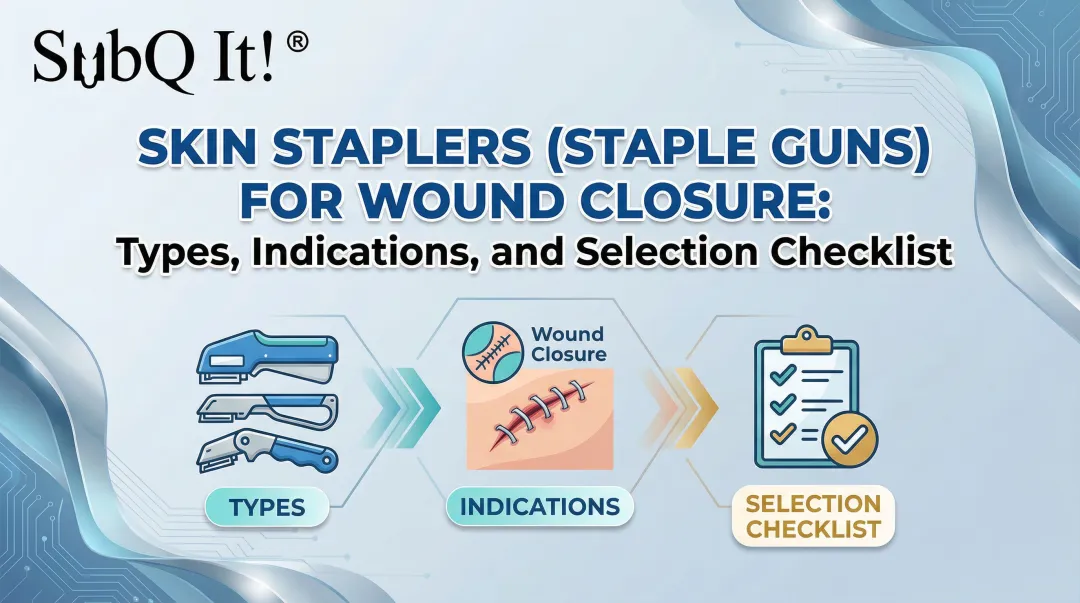
What Is a Skin Stapler?
A skin stapler is a surgical device used to close skin incisions and wounds after an operation. It is intended for use only by appropriately trained healthcare professionals under an authorized clinical order. It provides a fast and reliable alternative to traditional sutures (stitches), especially for larger or linear wounds in surgical settings such as hospitals and outpatient clinics.
Why Skin Staplers Are Used
- Faster wound closure: Stapling can be significantly quicker than suturing, especially for long or straight incisions.
- Consistent tissue approximation: Staples provide uniform closure, which supports optimal healing.
- Alternative to sutures: Surgeons commonly choose staples in procedures where speed and efficiency are priorities.
How Skin Staplers Work
- A clinician positions the stapler across the joined edges of the wound.
- When activated, the device deploys preloaded metal staples through both sides of the skin.
- As the staples exit, internal mechanisms bend the legs into a secure shape, holding the tissue together until healing progresses.
Which Type of Skin Staple Remover Works Best?
There are several categories of skin staple removers used in clinical practice. While all are intended to safely extract skin staples, they differ in design, reusability, and handling.
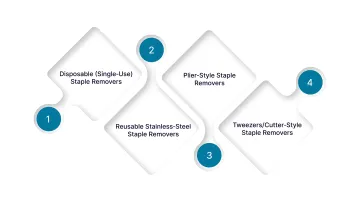
Disposable (Single‑Use) Staple Removers
Most disposable staple removers are single‑use sterile devices designed for rapid and hygienic removal of surgical skin staples. They eliminate the need for cleaning or sterilization between patients and can help reduce cross‑contamination risk.
Advantages:
Some of the reasons you might reach for a disposable remover include:
- Supplied sterile and ready‑to‑use, improving workflow efficiency.
- Reduces cross‑contamination compared with reusable instruments.
- Often ergonomic and comfortable to handle for quicker staple extraction.
- No sterilization costs or logistics required.
Reusable Stainless‑Steel Staple Removers
Reusable staplers are made from autoclavable surgical metals and designed for multiple procedures when properly sterilized and maintained. While less common in modern practice due to infection control preferences, they are still available and used in some facilities.
These instruments must be compatible with steam sterilization (autoclave) protocols as defined by ANSI/AAMI ST79 standards. Proper reprocessing involves rigorous cleaning, decontamination, and sterilization cycles.
Advantages:
- Lower long‑term cost in high‑volume settings when sterilization infrastructure exists.
- Durable construction intended for repeated use.
- Good option where sterilization workflows are established.
Plier‑Style Staple Removers
Plier‑style staple removers resemble small pliers and are one of the most common designs in clinical practice. They use a simple mechanical grip to bend and extract staples.
Advantages:
- Familiar handling similar to common surgical instruments.
- Offers firm control during staple extraction.
- It can be found in both disposable and reusable formats.
Tweezers/Cutter‑Style Staple Removers
Some removers are designed with a tweezer‑like or cutter‑style tip that slides under the staple and bends it for removal, improving precision in tight or delicate areas.
Advantages:
- Better visibility and precision for staple engagement.
- May be useful in locations where access is limited.
- Often designed with a comfortable grip to reduce hand fatigue.
5 Best Skin Staple Removers for Quick Recovery in 2026
This section reviews five widely used staple removers across different price points and facility types. Products were evaluated based on compatibility range, build quality, clinical feedback, and value proposition.
However, facilities seeking to eliminate staple removal entirely should consider bioabsorbable closure systems like SubQ It!, which use subcuticular fasteners that absorb naturally, removing the need for removal appointments, patient discomfort, and associated costs.
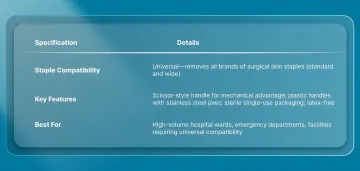
Product 1: 3M Precise Disposable Skin Staple Remover (SR-3)
3M Healthcare manufactures the SR-3 disposable remover for hospitals, clinics, and home health settings. This model offers universal compatibility across all major staple brands.
Product 2: Integra Miltex Skin Staple Remover Forcep
Integra LifeSciences (Miltex brand) produces this reusable remover for facilities with established sterilization protocols.
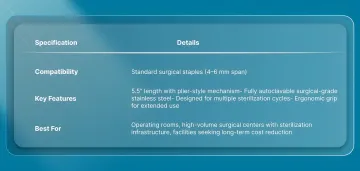
| Specification | Details |
|---|---|
| Key Features | - 5.5" length with plier-style mechanism- Fully autoclavable surgical-grade stainless steel- Designed for multiple sterilization cycles- Ergonomic grip for extended use |
| Compatibility | Standard surgical staples (4–6 mm span) |
| Best For | Operating rooms, high-volume surgical centers with sterilization infrastructure, and facilities seeking long-term cost reduction |
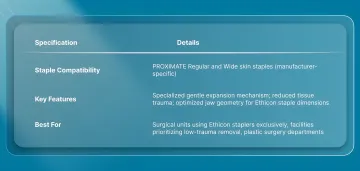
Product 3: Ethicon PROXIMATE Skin Staple Extractor (PSX)
Ethicon (Johnson & Johnson) designed the PSX specifically for their PROXIMATE stapler line. This remover uses specialized jaw geometry that expands staple legs gently before lifting, reducing tissue trauma compared to standard designs.
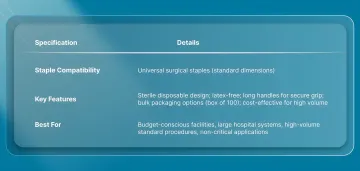
Product 4: Medline Sterile Skin Staple Remover (DYNJ04058)
Medline Industries offers this remover for budget-conscious facilities and large hospital systems. Bulk packaging provides lower per-unit costs for high-volume purchasers.
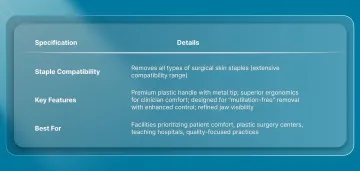
Product 5: Covidien Premium Skin Staple Remover (150462)
Medtronic's Covidien line includes this premium remover with advanced ergonomics and enhanced control features for patient comfort during removal.
What to Look for When Choosing a Skin Staple Remover for Clinical Use
The design of a staple remover directly impacts wound edge precision and minimizes microscopic tissue damage. Proper jaw alignment lowers post-removal redness and reduces microtears.
These are the key factors to consider before choosing a skin staple remover:
Common Selection Mistakes
Many facilities make these costly errors:
- Assuming all removers are universal (they're not—jaw width matters)
- Choosing based solely on unit price without calculating cost-per-use
- Ignoring ergonomic factors that affect clinician fatigue and removal success rates
- Failing to involve clinical staff in the selection process
Once you've identified these common pitfalls, start your selection process with compatibility verification.
Verify Staple System Compatibility
Critical First Step: Audit Your Staple Inventory
Before purchasing removers, document all staple brands and models currently used in your facility. Check whether you stock:
- Standard staples (4-6mm span)
- Wide staples (6-10mm span)
- Manufacturer-specific systems (e.g., Ethicon PROXIMATE)
Check Instructions for Use
Stapler manufacturers often specify compatible extractors in their IFU documentation. Ethicon, for example, recommends their PSX extractor specifically for PROXIMATE staplers to ensure proper jaw fit.
Consequences of Incompatibility
Using the wrong jaw width causes:
- Incomplete staple reformation (legs don't fully disengage)
- Staple bending or breakage
- Tissue dragging and patient discomfort
- Need for secondary instruments or multiple removal attempts
After confirming compatibility, evaluate your facility's volume to determine the most cost-effective approach.
Assess Volume and Sterilization Capacity
Cost-Per-Use Calculation Framework
Compare disposable versus reusable options using these calculations:
- Disposable cost: Unit price + disposal cost
- Reusable cost: (Purchase price ÷ lifespan in cycles) + reprocessing cost per cycle
Factor in these reprocessing inputs:
- Labor (cleaning, inspection, packing)
- Utilities (steam, water)
- Consumables (detergent, sterilization wrap)
Research on surgical instrument reprocessing shows complex instrument sets cost $52-67 per sterilization cycle.
Simple instruments like staple removers represent a fraction of this cost but must still be included in calculations.
Break-Even Analysis
For facilities performing 100+ staple removals monthly, reusable instruments typically become cost-effective within 6-12 months despite higher upfront costs.
Facilities with lower volumes or without dedicated sterilization staff benefit more from disposable options.
Beyond cost considerations, the physical design of your remover directly impacts clinical outcomes and staff satisfaction.
Evaluate Ergonomics and User Feedback
Why Ergonomics Matter
Poor ergonomic design leads to:
- Hand fatigue when removing long staple lines (20+ staples)
- Reduced control and precision
- Multiple removal attempts
- Increased procedure time
Key ergonomic features:
- Handle style: Scissor-style handles generally provide better mechanical advantage than tweezer-style designs
- Grip comfort: Textured or contoured handles reduce slippage
- Jaw visibility: A clear line of sight to the staple crown prevents accidental skin pinching
- Squeeze pressure required: Lower force requirements reduce hand fatigue
Involve Clinical Staff in Selection
Clinicians who perform staple removals daily know which design features improve removal speed and success rates. Consider running trial periods with 2-3 products to gather user experience data before committing to large purchases.
Final Thoughts
Staple removal is often seen as a routine follow-up step, yet it still introduces variability in patient comfort, clinician effort, and workflow efficiency. The tools used here can influence how consistently closures are managed across different settings.
As wound closure practices evolve, the focus is shifting toward approaches that reduce dependency on removal and streamline post-procedure care. This reflects a broader move toward consistency, efficiency, and improved patient experience.
In this context, systems like SubQ It! represent a different category of closure—placing absorbable fasteners beneath the skin through a controlled mechanical process, eliminating the need for removal.
By minimizing external disruption and follow-up steps, these systems support more predictable outcomes.
Explore how SubQ It! fits into your surgical workflow and connect with the team to learn more.
Frequently Asked Questions
1. Does it hurt to get skin staples removed?
Staple removal is generally associated with brief discomfort, often described as a pinching or pulling sensation. Pain perception varies depending on wound location, removal technique, and individual sensitivity. Clinical observations suggest that while discomfort is expected, it is typically mild and short-lived.
2. How do you care for a wound after staples are removed?
After staple removal, the incision site should be kept clean and dry for 24–48 hours. Adhesive wound closure strips may be applied to support the incision as it continues to heal. Patients should monitor for signs such as redness, swelling, drainage, or wound separation and follow clinician-specific aftercare instructions.
3. What happens if surgical staples stay in too long?
Surgical staples are typically removed within 7–14 days, depending on the incision location and healing progress. If left in place beyond the recommended timeframe, epithelial tissue can begin to grow over the staples, making removal more difficult and uncomfortable. Delayed removal may also contribute to increased scarring and localized irritation, and in some cases, elevate the risk of infection.
4. Do surgical staples affect scar appearance compared with sutures?
Clinical studies show no clear difference in long-term scar appearance between staples and sutures. Patient satisfaction with cosmetic outcomes is generally similar, though results can vary based on wound location and surgical technique.
5. Can staples increase the risk of wound complications like dehiscence?
Evidence does not show that staples significantly increase major wound complications compared with sutures. Outcomes like dehiscence depend more on patient factors, wound site, and surgical technique than on the closure method itself.
6. Does staple removal hurt more than suture removal?
Staple removal may cause slightly more discomfort than suture removal, but pain is usually mild and brief when performed correctly. Individual responses vary, and trained clinical staff can minimize discomfort.