Skin closure decisions often come down to routine, but suboptimal suture selection can quietly increase the risk of infection, wound dehiscence, and poor cosmetic outcomes. Variability in tissue tension, patient follow-up, and anatomical site only adds to the challenge, making consistent results harder to achieve.
This is where nylon sutures for skin closure continue to play a reliable role. In superficial closures where clean edge approximation and controlled tissue response are critical, they offer a level of predictability that supports consistent outcomes across a range of clinical scenarios.
This blog breaks down how nylon sutures perform in practice, highlighting where they work best and their limitations for effective skin closure.
TL;DR
- Nylon sutures are synthetic, non‑absorbable monofilament sutures commonly used for skin closure because they provide predictable wound support and minimal tissue reaction.
- Monofilament nylon has low capillarity and smooth passage through tissue, which reduces bacterial transport and supports clean incision healing.
- Its tensile strength and elasticity help maintain wound edge approximation, though it slowly loses strength over long periods due to hydrolysis.
- Limitations include handling challenges, high memory, and poorer knot security, requiring careful technique to secure knots.
- Nylon’s clinical use is driven by wound type and goals, with alternatives (e.g., polypropylene or absorbable sutures) chosen based on infection risk, follow‑up needs, and tissue characteristics.
What Are Nylon Sutures? (Material & Structure)
Nylon sutures are synthetic, non-absorbable sutures made from polyamide polymers (typically nylon-6 or nylon-6,6). These materials are chemically inert and designed to provide reliable wound support with minimal tissue reaction, making them a standard choice for skin closure.
Structure & Forms
- Monofilament nylon (primary clinical form)
- Single-strand polyamide structure
- Most commonly used for skin closure due to lower infection risk
- Less capillarity and smoother tissue passage
Multifilament (braided/twisted) nylon (less common)
- Multiple filaments combined, sometimes coated to reduce friction
- Offers better handling and knot security
- Higher capillarity and tissue interaction compared to monofilament
This balance is why nylon remains one of the most commonly used sutures for skin closure in clinical practice.
5 Reasons Why Nylon Sutures Work for Skin Closure
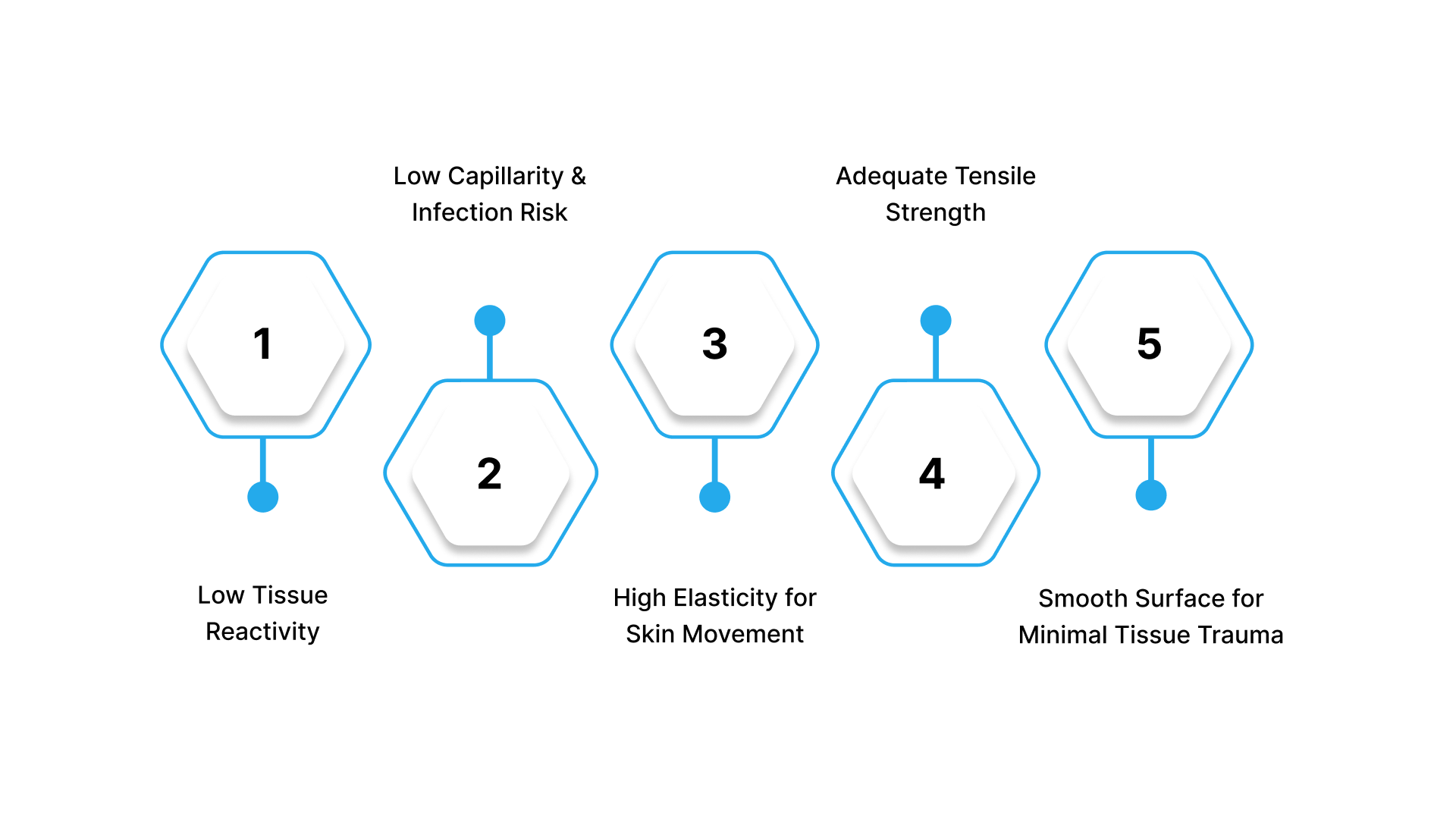 Nylon sutures continue to be widely used in skin closure because their material properties directly align with the needs of cutaneous healing, low infection risk, flexibility, and reliable wound support.
1. Low Tissue Reactivity
Nylon (polyamide) is a relatively inert synthetic material, which results in minimal inflammatory response in tissues.
This is especially important in skin closure, where excessive inflammation can lead to the following:
- Poor cosmetic outcomes
- Increased scarring
2. Low Capillarity and Infection Risk
Monofilament nylon has no capillary action, meaning it does not allow fluids or bacteria to travel along the suture strand.
This makes it particularly useful for:
- Clean surgical incisions
- Superficial wounds where infection control is critical
3. High Elasticity for Skin Movement
Nylon sutures are known for their elasticity and flexibility, allowing them to:
- Adapt to tissue swelling (edema)
- Maintain wound-edge approximation during movement
This reduces the risk of the following:
- Tissue tearing
- Excess tension at the wound site
4. Adequate Tensile Strength (With Gradual Loss Over Time)
Nylon provides strong initial tensile support, which is critical during early wound healing.
However, unlike truly inert materials, it undergoes slow hydrolytic degradation, leading to a gradual decline in strength (~15–25% per year).
In skin closure, this is actually beneficial:
- Strength is retained during healing
- Sutures are removed before long-term degradation becomes relevant
5. Smooth Surface for Minimal Tissue Trauma
The monofilament structure gives nylon a smooth surface with low tissue drag, allowing the following:
- Easier passage through the skin
- Reduced trauma during suturing
This contributes to:
- Cleaner wound edges
- Better cosmetic healing
5 Limitations That Impact Nylon Suture For Skin Closure
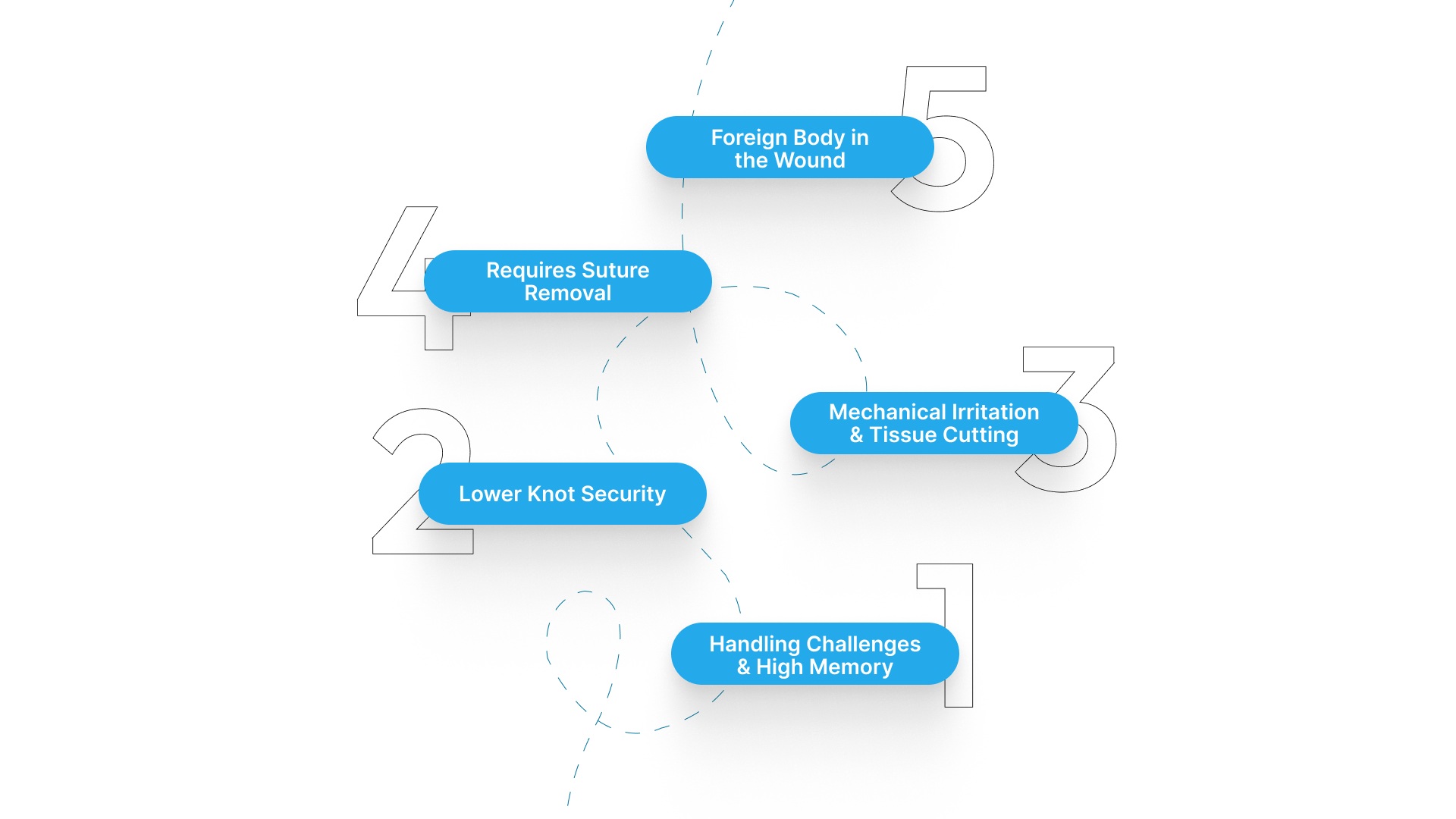
Even though nylon sutures are widely used for skin closure, they aren’t without drawbacks. Understanding these limitations helps clinicians make smarter, case‑by‑case choices.
1. Handling Challenges and High Memory
Nylon’s monofilament structure gives it high memory, meaning it tends to retain its original, coiled shape. This can make:
- Handling and placement are more difficult
- Knot security is less reliable unless additional throws are used
Monofilament nylon must often be tied with more knots (4–5 throws) to prevent loosening, compared with braided sutures.
2. Lower Knot Security
Because nylon monofilament is smooth and springy, it:
- Has relatively poor knot security
- Can loosen if not tied carefully
This is one of the most commonly cited practical limitations in surgical settings.
3. Mechanical Irritation and Tissue Cutting
When nylon is stiff, especially in larger sizes or older formulations, the sharp cut ends of the suture can:
- Mechanically irritates the surrounding tissue
- Cut through thin or delicate skin under tension
This may contribute to discomfort (for the patient) or suboptimal wound edge support.
4. Requires Suture Removal
Since nylon does not dissolve, it must be removed once healing has progressed. This adds:
- A follow‑up appointment
- Possible patient discomfort at removal
- Potential for track marks or scarring if left too long
Absorbable alternatives eliminate this step altogether.
5. Foreign Body in the Wound
Like all sutures, nylon remains a foreign body until removed. This means:
- Sutures do not restore the skin’s innate barrier
- Local infection risk still exists (dressings are often used to mitigate this)
Nylon vs Other Sutures: What Actually Changes in Practice?
When surgeons choose between nylon and other sutures, the decision isn’t just about “material type"; it’s about how the suture behaves in real tissue over time.
The following are the key differences between nylon sutures and other sutures:
| Factor | Nylon (Polyamide) | Polypropylene (Prolene) | Absorbable Sutures | Braided Sutures (Silk/Polyester) |
|---|---|---|---|---|
| Material Type | Synthetic, non-absorbable | Synthetic, non-absorbable | Synthetic, absorbable | Natural/synthetic, multifilament |
| Tensile Strength Behavior | High initial strength, gradual loss over time due to hydrolysis (~15–25%/year) | Retains strength for years, minimal degradation | Designed to lose strength as tissue heals | High strength (especially polyester), often long-lasting |
| Tissue Reactivity | Low (chemically inert polyamide) | Very low (more inert than nylon) | Moderate (depends on material and degradation) | Higher (especially silk) |
| Handling & Knot Security | Moderate handling, higher memory → requires extra throws | Poor handling, difficult knot security | Generally good handling | Excellent handling and knot security |
| Elasticity / Flexibility | High elasticity → adapts to skin movement | Flexible but less elastic than nylon | Varies by material | Moderate |
| Infection Risk | Low (monofilament, low capillarity) | Very low (monofilament) | Moderate | Higher (capillarity allows bacterial migration) |
| Need for Removal | Yes | Yes | No | Sometimes |
| Best Use Case | Routine skin closure, cosmetic areas | Long-term support, vascular or contaminated wounds | Deep tissues or when follow-up is uncertain | Situations requiring strong knot security (not ideal for skin) |
| Key Limitation | Memory + gradual strength loss | Difficult handling | Less control over wound support duration | Higher infection risk in skin closure |
Bioabsorbable Alternative: SubQ It! Subcuticular System
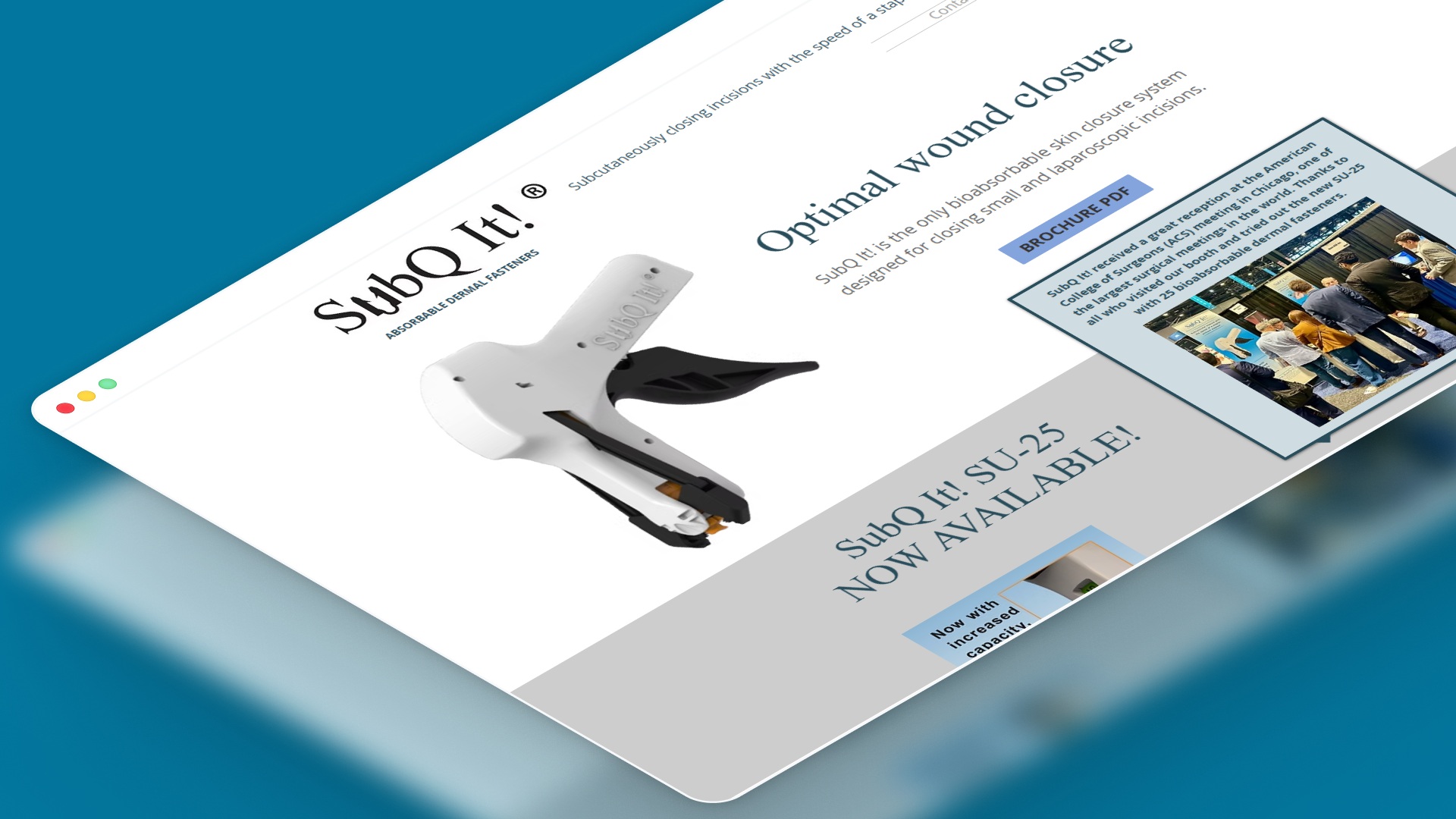 While nylon sutures remain a widely accepted and reliable method for percutaneous skin closure, newer technologies like SubQ It! offer an alternative approach that addresses some clinical limitations of traditional suturing.
- Faster Closure Than Traditional Sutures: Each bioabsorbable fastener deploys in about 7 seconds, making closure up to 7× faster than manual suturing, a significant advantage in busy OR settings and a useful comparison point with time‑intensive nylon sutures.
- No Removal Visit Needed: Because fasteners absorb naturally during healing, patients avoid return appointments for staple removal. It reduces follow‑up care time, patient anxiety, and total care costs.
- Superior Cosmetic Results: Subcuticular placement means the external skin is never pierced, which minimizes scarring and prevents the “railroad‑track” marks often seen with metal staples. This aligns with cosmetic objectives in skin closure techniques.
Versatile Across Procedure Types
SubQ It! devices come in models like:
- SU‑10: 10 fasteners for incisions up to ~10 cm
- SU‑25: 25 fasteners for longer incisions up to ~25 cm For a range of surgical applications, including laparoscopic, abdominal, orthopedic, and plastic surgeries.
Final Thoughts
Nylon sutures remain a trusted and effective option for skin closure due to their reliable tensile strength, low tissue reactivity, and predictable handling in percutaneous wound closure. Scientific evidence suggests that subcuticular techniques, whether sutures or modern devices, can offer excellent outcomes in infection rates, complications, and patient satisfaction when applied appropriately.
At the same time, advancements in closure technology are expanding the toolkit available to surgeons. Bioabsorbable systems like SubQ It! offer a rapid subcuticular closure that eliminates the need for staple removal, reduces visible scarring, and delivers closure up to seven times faster than traditional methods.
For surgical teams seeking both efficiency and enhanced cosmetic outcomes, contact SubQ It! today to discuss how this bioabsorbable closure option can complement your practice.
FAQs
1. What are nylon sutures, and how are they classified?
Nylon sutures are a non‑absorbable synthetic suture material made from polyamide polymers. They are most commonly produced as monofilament strands, which offer low tissue reactivity and reduced bacterial transport, making them suitable for skin closure.
2. Why is monofilament nylon preferred over braided forms?
Monofilament nylon has a smooth surface with low capillarity, which helps minimize infection risk and tissue reaction compared with braided sutures. Braided materials have higher bacterial adherence due to fluid absorption between filaments.
3. How long do nylon sutures retain tensile strength?
Nylon retains significant strength over time, though it undergoes slow hydrolysis. It may maintain a large portion of its original tensile strength, but it decreases gradually over the years, making it reliable for skin closure.
4. What are the typical clinical uses of nylon sutures?
Nylon, as a monofilament non‑absorbable suture, is widely used for cutaneous skin closure, especially when low tissue reactivity and good wound edge approximation are priorities.
5. What are the main limitations of nylon sutures?
Nylon’s poor handling and knot‑security characteristics due to its high memory and stiffness make secure knot tying more challenging than for some other suture types.
6. Do nylon sutures cause more inflammation than other materials?
Compared with natural or certain absorbable materials, nylon’s chemically inert structure induces relatively low inflammatory reaction in tissue, which is a reason for its continued use in cutaneous closures.
7. Are nylon sutures suitable in contaminated or infected wounds?
Although monofilament nylon has low capillarity and less bacterial transport than braided sutures, sutures in general may exacerbate infection if placed in heavily contaminated wounds. Careful surgical judgment is needed in such cases.