Wound closure hasn't changed much in most ORs. Sutures, metal staples, maybe an adhesive strip for low-tension sites. These categories have worked for decades, and most surgeons haven't had a reason to look beyond them.
The wound closure device space has grown, though. Newer closure systems are reducing OR time measurably. In a study of 75 reduction mammoplasty patients, total procedure time with an absorbable dermal stapler averaged 154 minutes compared to around 170 minutes with suture-only closure.
In this post, you’ll get a detailed breakdown of wound closure device companies by closure type, what each category does well, and where limitations remain. If you're evaluating vendors or exploring options, this post is the right place to start your research process and make an informed decision.
Key Takeaways
- Bioabsorbable subcutaneous closure is the newest wound closure category, placing fasteners under the skin that dissolve without a removal visit.
- In a study of 4,311 mastectomy patients, absorbable subcuticular staplers closed incisions in 16.2 minutes compared to 36.5 minutes for hand-sewn suture, with no difference in infection rates.
- Subcuticular closure consistently earns better scar appearance scores from both patients and independent evaluators compared to surface-level techniques.
- Wound closure device companies range from suture and stapler manufacturers like Ethicon and Medtronic to newer firms producing bioabsorbable systems and adhesive technologies.
- When comparing wound closure device companies, the criteria that matter most are incision size range, scarring profile, OR time impact, follow-up requirements, and cost per use.
What Are Wound Closure Devices?
Wound closure devices are the instruments and materials surgeons use to bring incision edges together after a procedure. The category includes sutures (absorbable and non-absorbable), metal skin staplers, tissue adhesives, adhesive strips, and bioabsorbable subcutaneous fastener systems. Each closure type works differently, and the companies behind them tend to specialize in one or two categories.
Sutures remain the single largest product segment across the wound closure device market. Suture-based closure products are deeply familiar to most practicing surgeons, while newer categories like bioabsorbable systems have had less exposure.
Knowing the full range of wound closure device companies and what each one actually produces matters when you're evaluating options for your OR. The category has expanded well beyond traditional sutures and metal staplers, and the newer entrants are solving clinical problems that older methods leave unresolved.
Who Are the Largest Suture and Metal Stapler Companies?
Suture and metal stapler companies make up the largest share of the wound closure device category. Their products have been standard OR inventory for decades, and they continue to hold the widest distribution across U.S. hospitals and ASCs.
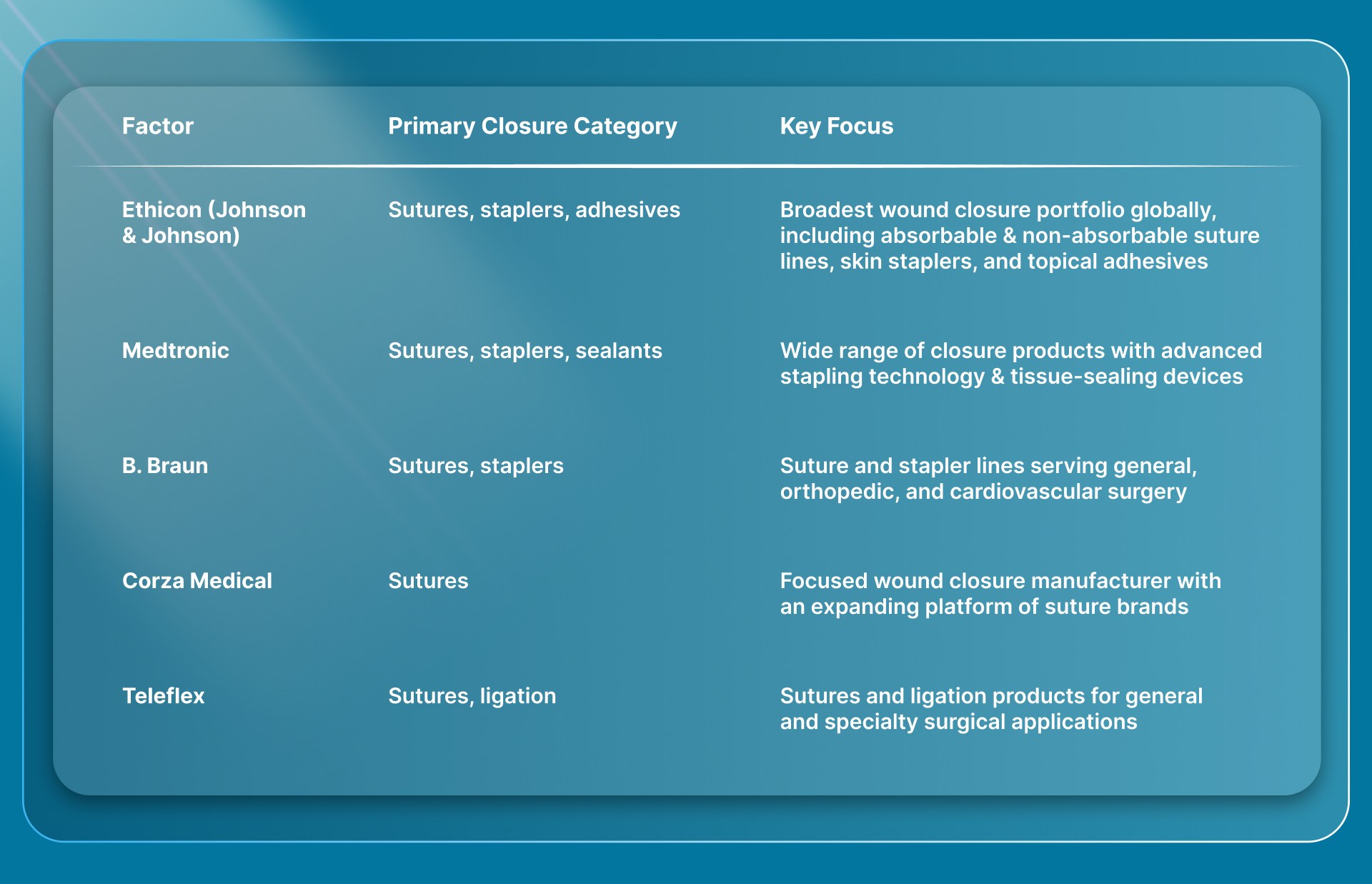
Ethicon and Medtronic hold the largest combined presence in the suture and stapler space. Corza Medical has built its portfolio specifically around wound closure, while B. Braun and Teleflex serve the category alongside broader surgical instrument lines.
Traditional metal skin staplers from these companies are widely used for speed. They close incisions faster than hand-sewn suturing, but they're placed on the skin surface, require removal in 7 to 10 days, and leave characteristic railroad-track scars at each puncture site.
For surgeons weighing the trade-offs between a surgical skin stapler and sutures, the scarring profile and follow-up burden are the most common friction points.
What About Adhesive and Strip-Based Closure Companies?
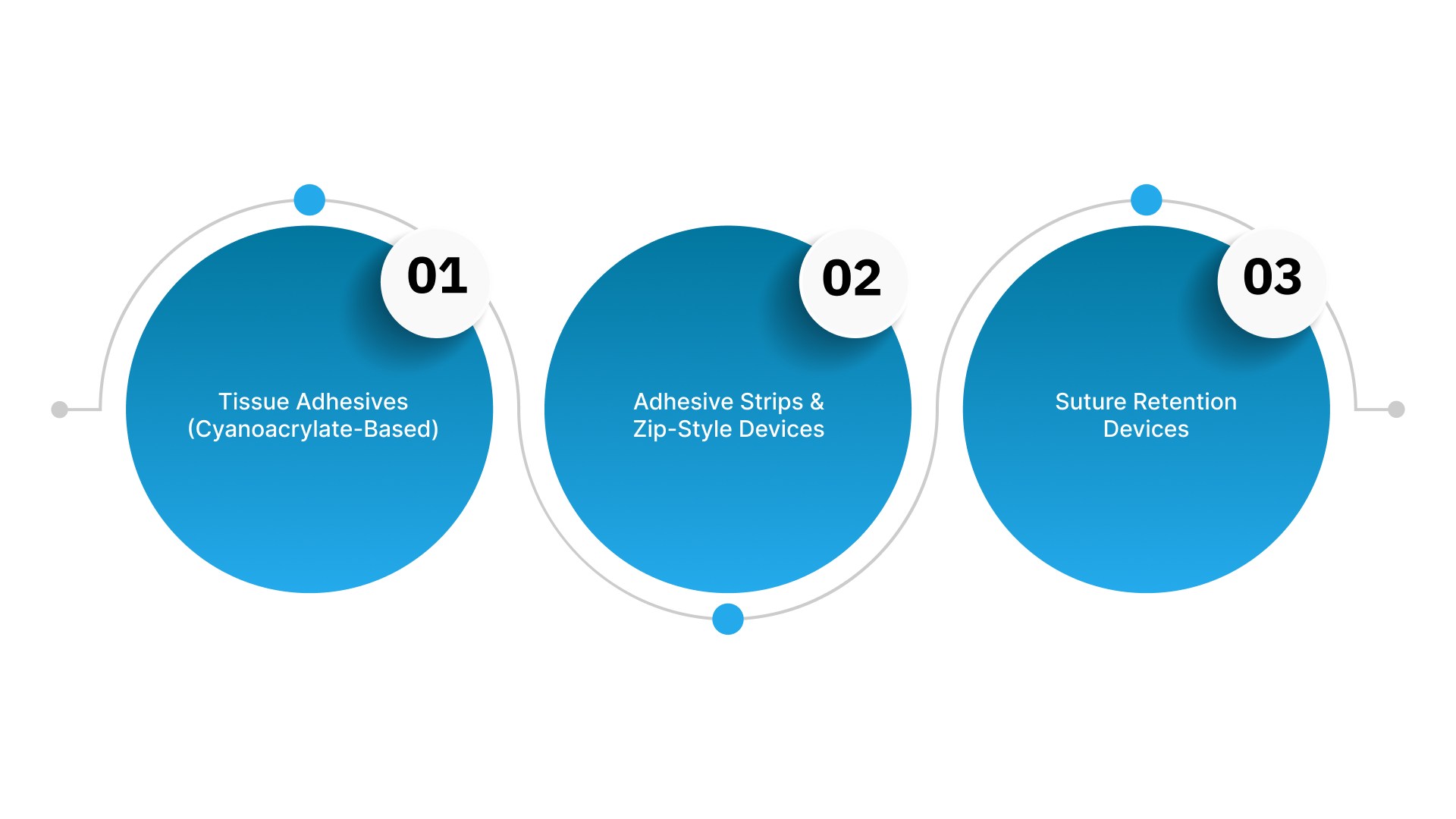
Tissue adhesives and adhesive strips occupy a different niche in wound closure. These products are surface-applied and work best on low-tension wounds, superficial lacerations, and as supplementary reinforcement over a sutured or stapled closure.
- Tissue adhesives (cyanoacrylate-based): Companies like Ethicon (with Dermabond) produce topical skin adhesives that bond incision edges without sutures or staples. These work well for small, clean, low-tension closures but aren't suitable for high-tension surgical incisions or deeper tissue layers.
- Adhesive strips and zip-style devices: Stryker's Zip product line and similar adhesive skin closure strips distribute tension across the incision surface. They're non-invasive and leave no puncture marks, but they depend on skin adhesion and can't match the holding strength of sutures or staples on longer or higher-tension wounds.
- Suture retention devices: Companies like Suturegard produce devices that reinforce sutures in high-tension areas, reducing the risk of suture pull-through. These are adjuncts to suturing, not standalone closure methods.
The main limitation across this category is tensile strength. Adhesives and strips work reliably on superficial, low-tension closures. For deeper tissue layers, longer incisions, or sites under mechanical stress, surgeons still need sutures, staplers, or bioabsorbable systems.
Are There Companies Making Bioabsorbable Subcutaneous Closure Devices?
Yes, bioabsorbable subcutaneous closure is the newest category in the wound closure device market. These systems place fasteners beneath the skin surface, in the dermal layer, where they dissolve naturally over time. The fasteners don't puncture the outer skin, they don't leave railroad-track scars, and they don't require a return visit for removal.
This category is clinically distinct from traditional metal staplers and sutures in several ways.
- Bioabsorbable fasteners: The fasteners dissolve on their own, so they don't require a removal appointment.
- Subcutaneous placement: Because they're placed under the skin rather than through it, they avoid the characteristic scarring that surface-applied metal staples produce.
- Documented time savings: Independent research has shown significant gains in closure speed compared to hand-sewn methods. In a retrospective analysis of 4,311 mastectomy patients, an absorbable subcuticular stapler closed incisions in 16.2 minutes on average, compared to 36.5 minutes for hand-sewn suture, with no difference in surgical site infection rates between the two groups.
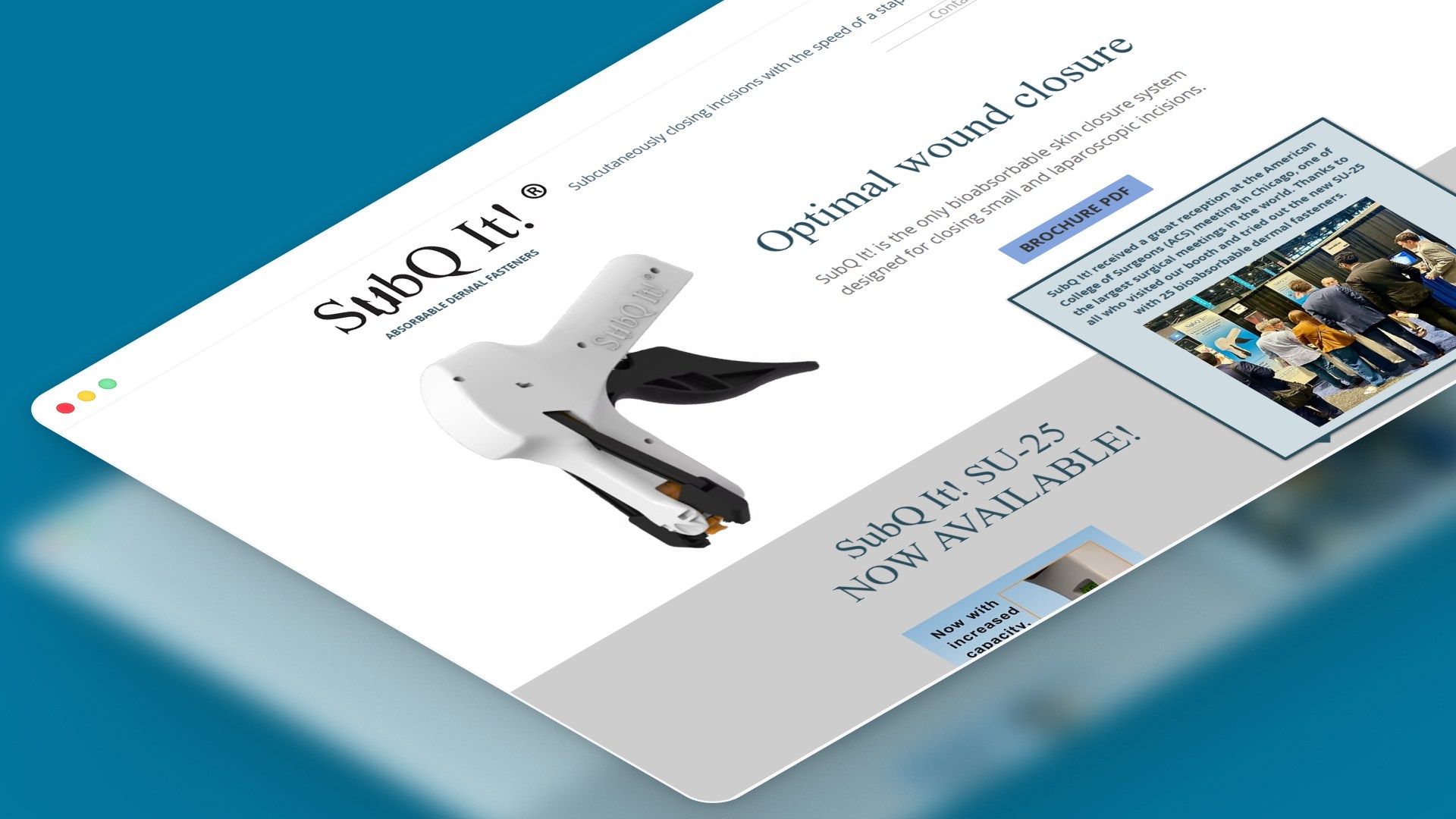
SubQ It! is a bioabsorbable wound closure system in this category. It's available in two configurations: the SubQ It! SU-10 (10 dermal fasteners, for incisions up to 10 cm) and the SubQ It! SU-25 (25 fasteners, for incisions up to 25 cm).
The SU-10 covers very small laparoscopic incisions, including trocar port sites of just a few millimeters, where surface-applied devices can't operate. The SU-25 handles longer incisions typical of open-surgery and plastic-surgery procedures.
One limitation in the broader bioabsorbable category worth noting: external zipper-style horizontal placement devices, designed primarily for long incisions like C-sections, can't be used for very small laparoscopic incisions and often require a hand stitch at the incision ends to complete the closure. SubQ It! uses vertical placement and closes end-to-end across the full size range, from a few millimeters up to 25 cm.
How Should Surgeons Compare Wound Closure Device Companies?
The closure device that fits one surgical specialty may not fit another. Comparing wound closure device companies requires matching their products to your practice's clinical and operational needs. Here are the criteria that matter most.
Incision Size Range and Closure Fit
Not every closure device covers the same range of incisions. Sutures handle nearly any length but require significant time on longer incisions. Metal staplers are fast across a range of sizes but leave surface marks.
Some bioabsorbable systems cover incisions from a few millimeters up to 25 cm, while others are designed primarily for longer wounds and can't serve small laparoscopic or trocar port sites. Match the device to the incision sizes you close most frequently.
Scarring and Cosmetic Outcomes
The closure method directly affects scar quality. Randomized trials have consistently shown that subcuticular closure yields better scar appearance ratings from both patients and independent observers than surface-level techniques.
For plastic and cosmetic surgery practices, this difference matters to patient satisfaction and referral volume. Surface-applied metal staples add railroad-track marks at each puncture site, which persist even after removal.
Follow-Up Requirements
Metal staples must be removed in 7 to 10 days, which means scheduling a follow-up visit. Missed appointments are a common problem across surgical practices, and every no-show for a staple removal creates both a clinical risk (retained staples) and an administrative burden.
Bioabsorbable closure systems that dissolve in place remove this friction entirely. There's nothing to schedule, no risk of missed appointments, and no chance of retained staples from a visit that never happened.
Cost Per Use and Economic Impact
Device cost alone doesn't tell the full story. A suture pack may cost less per unit, but the OR time required to hand-sew a long incision carries its own expense. A skin stapler is fast but adds a removal visit to the workflow.
Bioabsorbable systems eliminate both the extended closure time and the follow-up appointment. For surgeons who own their practice or operate in ASCs, the per-case time savings directly translate into additional capacity for procedures.
What Trends Are Shaping the Wound Closure Device Market in 2026?
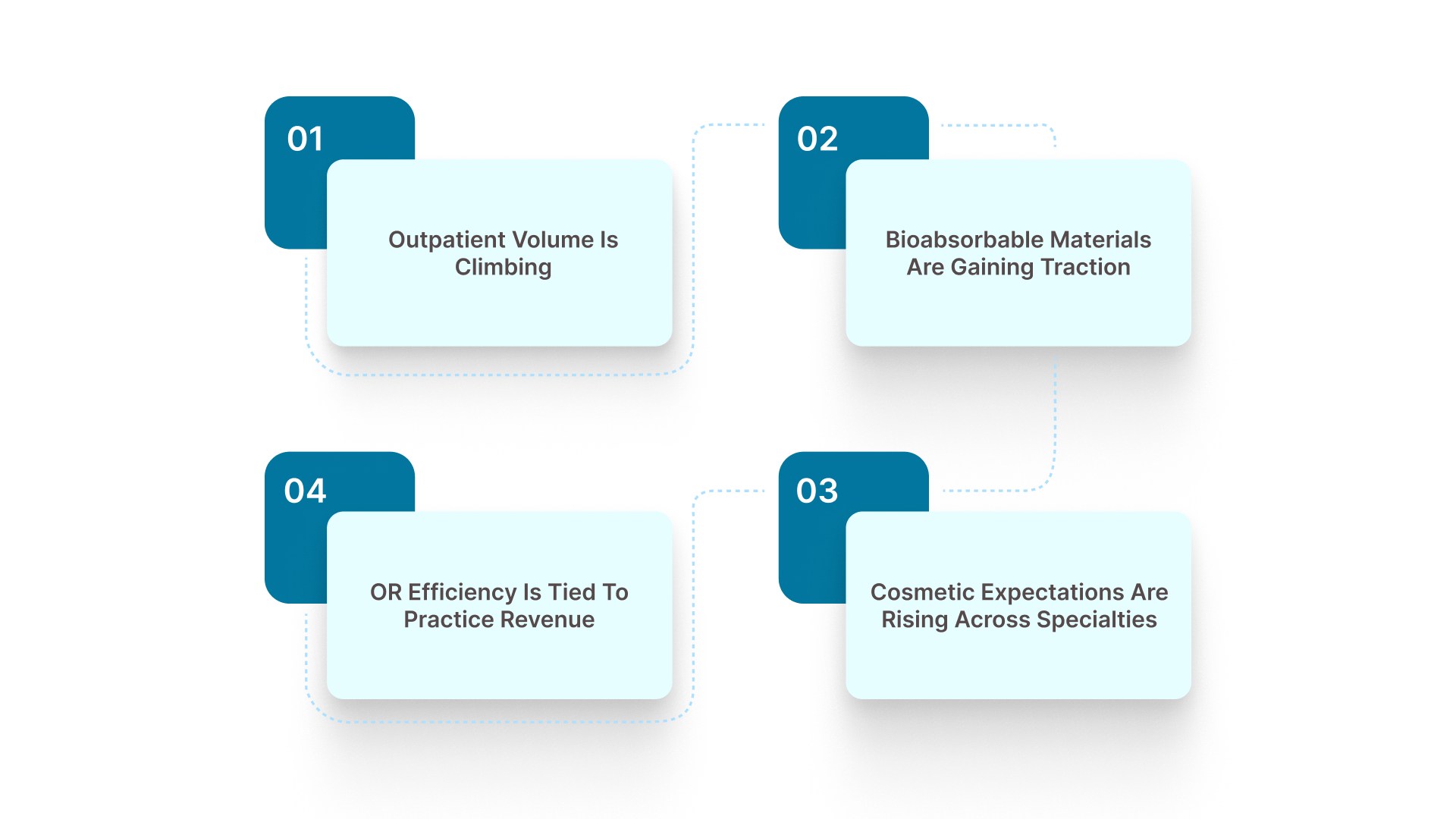
The wound closure device category is growing, and the growth isn't evenly distributed. Several trends are pushing demand toward newer closure technologies.
- Outpatient volume is climbing: The number of ambulatory surgery centers in the U.S. continues to grow, and outpatient settings now handle the majority of surgical procedures nationally. When surgeries happen in leaner outpatient environments, per-case efficiency gains from faster closure methods carry more economic weight.
- Bioabsorbable materials are gaining traction: Companies producing bioabsorbable stapler systems and polymer-based fasteners are entering a market long held by metal and non-absorbable materials. The appeal is clear. These devices don't require a removal visit, avoid surface scarring, and have shown comparable infection rates to traditional methods.
- Cosmetic expectations are rising across specialties: Scar quality is no longer a concern limited to plastic surgery. General surgeons and laparoscopic surgeons are hearing more from patients about cosmetic outcomes. Closure methods that avoid railroad-track marks are gaining attention outside the traditional cosmetic specialties.
- OR efficiency is tied to practice revenue: Every minute of OR time has a direct dollar value. Closure methods that save even 15 to 20 minutes per case create room for additional procedures without extending the surgical day.
These trends favor wound closure device companies that offer bioabsorbable, subcutaneous, and no-removal-required products. The companies producing traditional sutures and metal staplers still hold the largest market share, but the competitive pressure from newer categories is measurable.
How Does Closure Method Affect Scarring and Infection Risk?
Closure device choice has a direct effect on two outcomes that patients and surgeons care about most, scar appearance and surgical site infection (SSI) risk.
On scarring, the evidence is consistent. Subcuticular (under-the-skin) closure methods produce better-rated scars than surface-level techniques. In a 2024 randomized trial, patients rated the appearance of subcuticular closure scars at 3.50 vs. 4.71 for horizontal mattress closure (lower scores indicate better results). Independent observers reached the same conclusion.
Surface-applied metal staples carry an additional cosmetic disadvantage. The puncture sites on either side of the incision produce railroad-track marks that persist even after the staples are removed. Subcuticular closure avoids this entirely.
A separate 2025 randomized trial in open carpal tunnel release patients found that subcuticular monocryl closure produced lower pain scores at six weeks and better early scar evaluations, particularly for itching and stiffness, compared to interrupted nylon sutures. The subcuticular group also didn't need a suture removal visit.
On infection risk, the picture is more nuanced. Surgical site infections occur in approximately 0.5% to 3% of patients undergoing surgery, and patients who develop SSI are hospitalized roughly 7 to 11 additional days. Closure method is one factor among many that influences SSI risk.
The key finding for surgeons evaluating bioabsorbable options is that absorbable subcuticular staplers haven't shown higher infection rates than hand-sewn sutures vs. staples in published comparative data. In the study, it was observed that the infection rates were 0.38% with the absorbable stapler vs. 0.36% with hand-sewn suture, a statistically insignificant difference.
Final Thoughts
The wound closure device market has more companies and more closure categories than most ORs reflect. Sutures and metal staplers still hold the majority share, but bioabsorbable subcutaneous systems now address problems those methods leave unresolved, from railroad-track scarring to mandatory removal visits and extended closure times on longer incisions.
For surgeons evaluating closure devices in 2026, the criteria are practical. Match the device to your incision sizes, weigh the scarring profile against your patients' expectations, and factor in OR time and follow-up requirements alongside the per-unit cost. The right closure method depends on your case mix and your practice model.
SubQ It! covers incision sizes from a few millimeters to 25 cm with bioabsorbable fasteners that dissolve in place, require no removal visit, and avoid surface scarring. Surgeons who wait to evaluate newer closure categories risk staying locked into methods that cost them time, visits, and cosmetic outcomes they could improve today. Contact us today to request a custom quote.
FAQs
1. How Many Companies Make Wound Closure Devices in the United States?
Dozens of companies produce wound closure devices in the U.S., ranging from large multinational corporations with full suture and stapler portfolios to smaller firms specializing in adhesive, strip-based, or bioabsorbable systems. The number continues to grow as new closure technologies enter the market.
2. What Types of Wound Closure Devices Are Available Today?
The main categories include absorbable and non-absorbable sutures, metal skin staplers, tissue adhesives, adhesive strips, suture retention devices, and bioabsorbable subcutaneous fastener systems. Each category serves different incision types, tissue layers, and clinical priorities.
3. Do All Wound Closure Staples Require a Removal Visit?
No, not all staples require removal. Traditional metal skin staples are placed on the surface and need to be removed at a follow-up appointment within 7 to 10 days. Bioabsorbable subcutaneous staples dissolve on their own and don't require a return visit.
4. Can a Single Closure Device Work for Both Small and Long Incisions?
Yes, some bioabsorbable subcutaneous systems are available in configurations that cover incisions from a few millimeters up to 25 cm. Other devices are designed for narrower ranges, so checking the product specifications before selecting a closure method is important.
5. What Should a Private Practice Consider When Choosing a Closure Device Vendor?
Private practices should evaluate closure devices based on OR time per closure, follow-up visit requirements, scar quality, incision size range, and per-unit cost relative to the time savings delivered. The economic fit depends on case volume and the most commonly performed procedures.
6. Are Adhesive Closure Devices Strong Enough for Surgical Incisions?
Yes, for certain incision types. Tissue adhesives and adhesive strips work reliably on small, clean, low-tension closures. They're not designed for high-tension surgical incisions, deeper tissue layers, or longer wounds where sutures, staplers, or bioabsorbable systems are more appropriate.