
In certain procedures like stoma reversals, surgical site infection rates have historically reached 40%. The culprit? Traditional linear closures trap bacteria and exudate beneath the skin surface, creating ideal conditions for complications.
Purse-string skin closure offers a solution. This circular suturing technique places a continuous suture around a wound's perimeter and draws it tight like a drawstring, reducing wound size while maintaining drainage.
Key applications include:
- Stoma reversals with circular defects
- Dermatologic excisions and procedures
- Contaminated or high-risk wounds requiring drainage
Despite its proven benefits, many practitioners lack detailed understanding of when and how to optimize purse-string closure for best patient outcomes. This guide provides current evidence and practical guidance to help surgical teams make informed decisions about this technique.
TL;DR
- Purse-string closure reduces wound diameter by 60-80% immediately, while leaving a small drainage opening
- Infection rates drop from 24% to 5% compared to linear closure
- The technique works best for circular defects 1-5cm in diameter with adequate tissue laxity
- Success requires proper suture placement 3-5mm from wound edges at a consistent depth
- Bioabsorbable closure systems achieve subcuticular approximation 7X faster than sutures
What Is the Purse-String Closure Technique?
Purse-string closure is a surgical suturing method where the surgeon places a continuous suture in a circle around a wound and progressively tightens it to reduce the wound's surface area. Think of it like pulling the drawstring on a purse.
The technique delivers one of two outcomes: complete wound closure when tension allows, or significant size reduction that promotes faster healing by secondary intention with minimal scarring.
Most applications reduce wound diameter by 60-80% immediately. The remaining central opening (5-10mm) then heals over 3-6 weeks.
How It Differs from Linear Closure
Unlike linear closure, which brings wound edges together in a straight line, purse-string closure works from the periphery inward. The suture gathers tissue in radial folds that converge toward a central point.
This creates a controlled reduction in surface area while maintaining drainage capability.
Key variations exist:
- Standard purse-string (single-layer closure)
- Modified purse-string (with subcutaneous layer closure)
- Layered techniques (multiple depth levels)
All variations share the fundamental circular gathering principle that distinguishes this technique from conventional linear approximation.
Why Purse-String Closure Is Used in Surgery
Evidence of Infection Reduction
Meta-analyses of randomized controlled trials show infection rates of just 5.2% with purse-string closure compared to 24.3% with linear closure for stoma reversal sites. This 80% relative risk reduction represents the most compelling reason surgeons adopt this technique.
One comprehensive analysis found an odds ratio of 0.15, meaning patients receiving purse-string closure have 85% lower odds of developing surgical site infections compared to linear closure.
Clinical Applications and Advantages
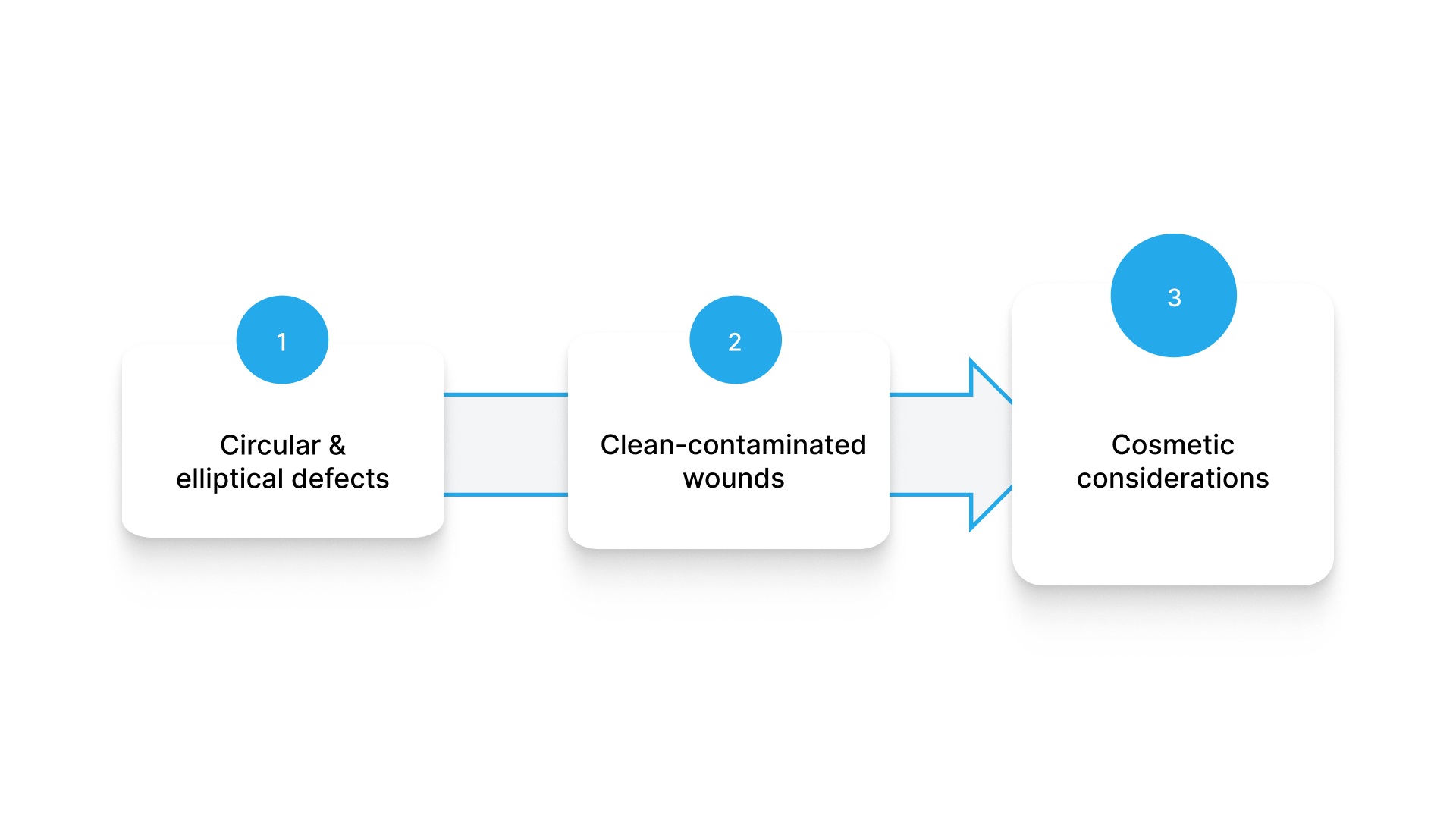
This infection reduction stems from how purse-string closure addresses specific clinical challenges:
Circular and elliptical defects: Linear closure of round wounds creates excessive tension at the poles and unsightly "dog-ear" deformities. Purse-string closure distributes tension evenly.
Clean-contaminated wounds: The central drainage opening allows exudate and contaminants to escape rather than accumulating beneath closed skin.
Cosmetic considerations: Patients report significantly higher satisfaction with scar appearance, with satisfaction scores of 4.01 versus 2.38 on standardized scales.
Standard of Care Recognition
The American Society of Colon and Rectal Surgeons issued a Grade 1A strong recommendation supporting purse-string closure for ostomy sites, indicating high-quality evidence of advantages over other techniques. This represents the highest level of clinical recommendation based on multiple randomized controlled trials.
How the Purse-String Closure Works
Conceptual Mechanism
Purse-string closure functions by creating concentric tissue tension that draws wound edges inward in a controlled manner. The technique reduces surface area while maintaining a small central opening for drainage until complete epithelialization occurs.
The technique requires specific conditions:
- Circular or elliptical surgical defect (typically 1-5cm diameter)
- Absorbable suture material (typically 3-0 or 4-0 monofilament)
- Curved cutting or reverse cutting needle
- Adequate subcutaneous tissue depth for suture placement
The surgeon places a continuous intradermal or subcuticular suture circumferentially at a consistent depth (typically 3-5mm from the wound edge). Progressive tightening gathers tissue radially while leaving a small (5-10mm) central opening.
Tension is carefully modulated during tightening to avoid tissue strangulation or suture breakage, with the surgeon controlling final wound diameter through careful adjustment before securing the suture ends.
This mechanism translates into a four-step procedural sequence.
Step-by-Step Process
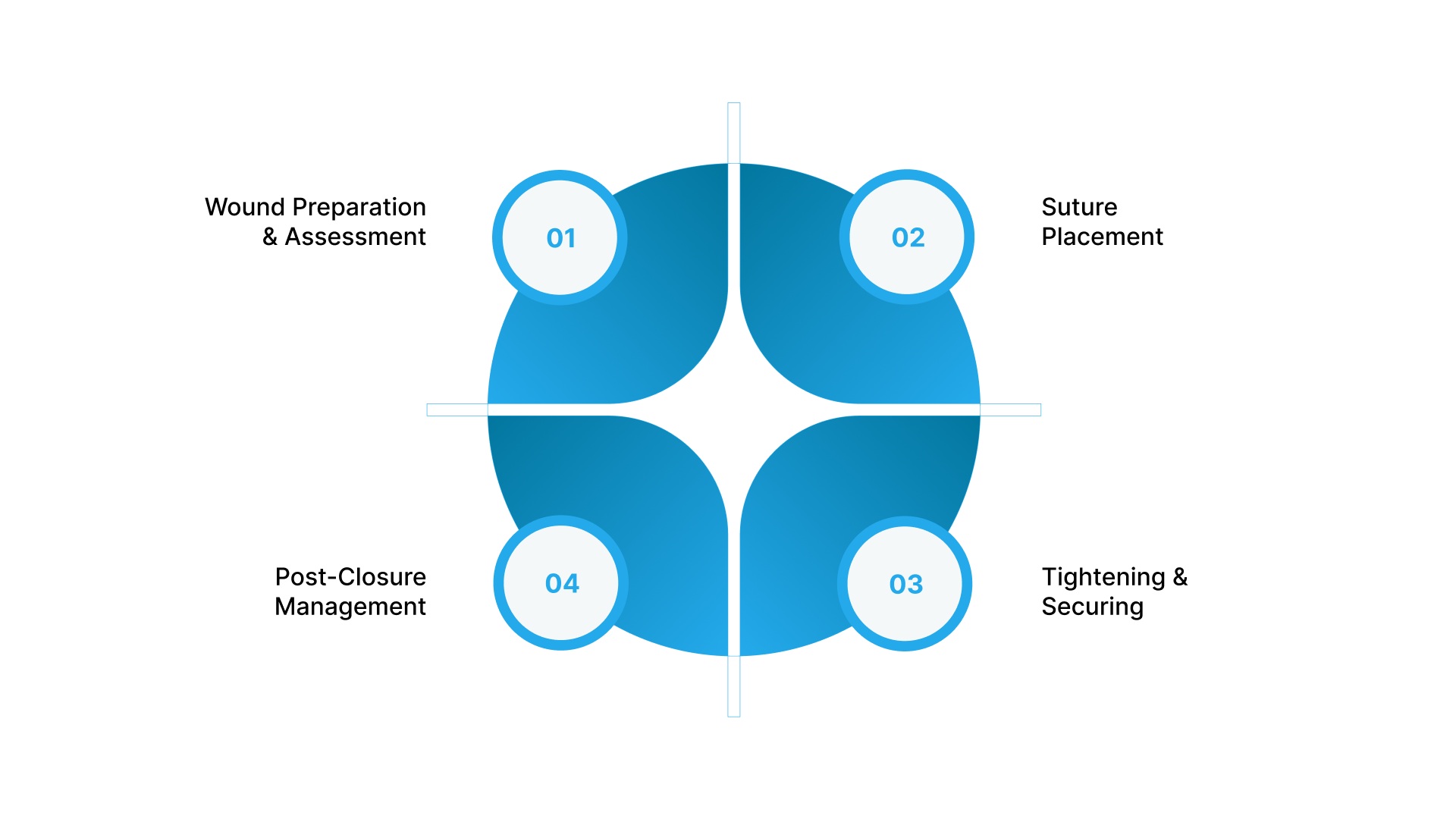
Step 1: Wound Preparation and Assessment
Before beginning closure, the surgeon evaluates whether the wound is suitable for the purse-string technique:
- Diameter: 1-5cm works best
- Shape: Circular or elliptical preferred
- Depth: Full-thickness closure requires a deeper layer approximation first
- Location: Areas with adequate tissue laxity (abdomen, thigh) tolerate the technique better than tight-skinned areas (scalp, shin)
- Contamination level: Clean-contaminated wounds benefit most; heavily infected wounds may require delayed closure
Step 2: Suture Placement
With the wound prepared, place a continuous intradermal or subcuticular suture in a circular pattern around the wound perimeter:
- Position the entry point 3-5mm from the wound edge
- Maintain consistent depth in the deep dermis throughout the circumference
- Space suture bites evenly
- Keep tissue gathering uniform to prevent irregular folds
- Complete the circle, exiting near the original entry point
Step 3: Tightening and Securing
Once the circumferential suture is placed, gradually tighten the ends in a controlled manner:
- Monitor tissue perfusion during tightening
- Watch for tissue blanching (indicates excessive tension)
- Reduce wound diameter by 60-80%
- Leave a central opening of 5-10mm for drainage
- Secure with multiple knots to prevent loosening
Step 4: Post-Closure Management
After securing the purse-string, the partially closed wound requires specific post-operative care:
- Daily dressing changes with petroleum-based or antibiotic ointment
- Keep the central opening moist to promote granulation
- Monitor for signs of infection or excessive drainage
- Allow the remaining defect to heal by secondary intention over 3-6 weeks
- Radial skin folds typically flatten within 2-3 weeks
Where Purse-String Closure Is Applied
Primary Surgical Contexts
The technique is most commonly applied in these settings:
- Stoma reversal sites — The most widely studied application, including ileostomy and colostomy closure. Evidence shows this is now considered best practice per Cochrane review recommendations.
- Dermatologic surgery — Excision of circular skin lesions, removal of cysts or tumors, particularly when the defect is 1-5cm in diameter and located in areas with good tissue laxity.
- Plastic and reconstructive procedures — Circular defects after flap harvest, donor site closure, or revision of circular scars.
- Trauma and burn management — Occasionally used for circular wounds requiring drainage while promoting closure.
Procedural Timing
Surgeons apply the technique as the final step of wound closure after deeper layers are closed, or as the primary closure method for superficial circular defects. They perform it immediately after tissue excision or stoma takedown, typically as a one-time definitive closure.
Decision Triggers
Understanding when to use this technique helps optimize surgical outcomes. Surgeons choose a purse-string closure when faced with:
- Circular defects >1cm diameter
- Clean-contaminated wounds requiring drainage
- Areas where linear closure would create unacceptable dog-ears
- Patient preference for avoiding staple removal
- Sites where infection risk is elevated
Key Factors That Affect Purse-String Closure Success
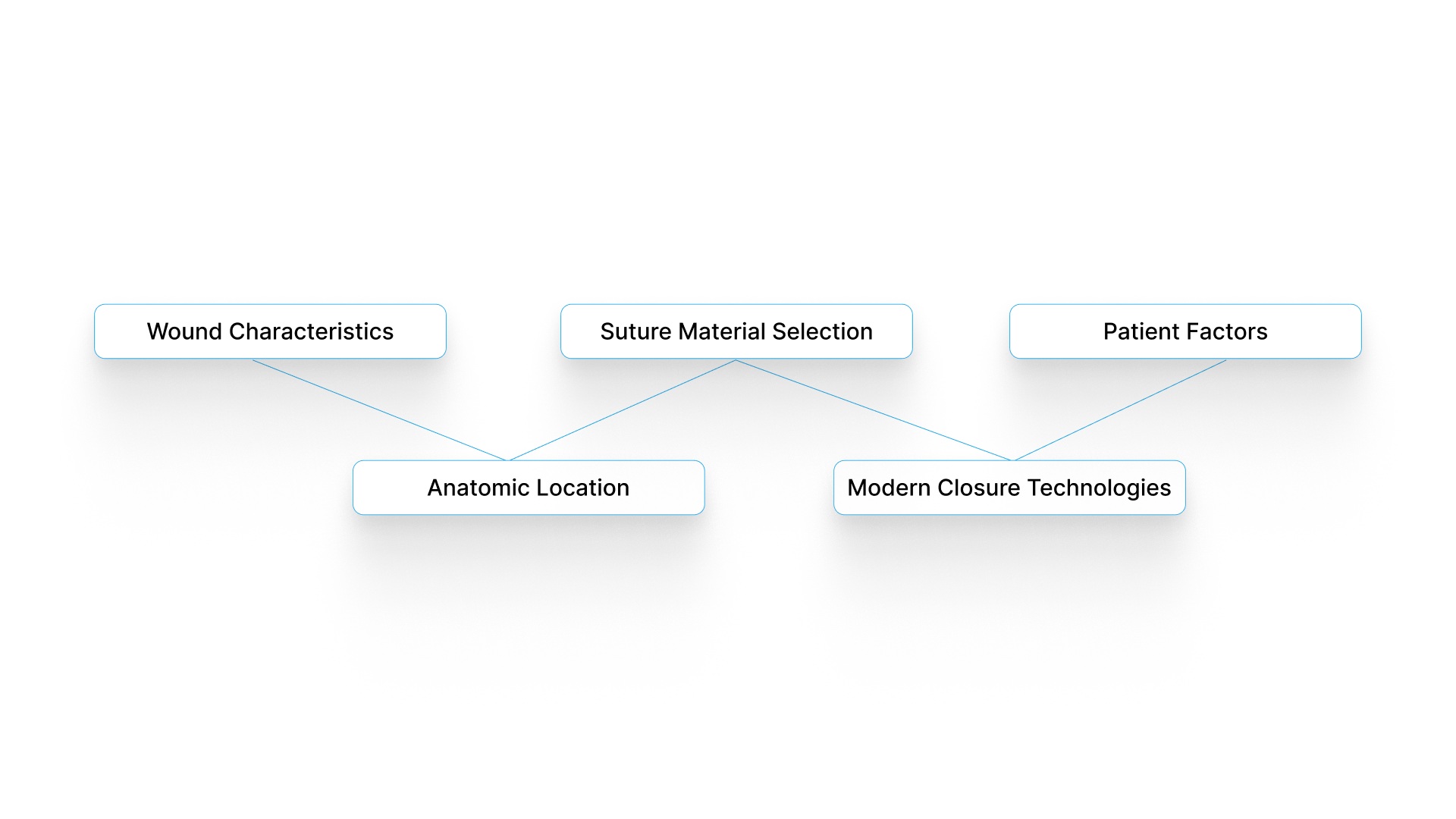
Wound Characteristics
Size considerations: Optimal results occur with defects 1-5cm in diameter. Wounds smaller than 1cm may close adequately with simpler techniques, while defects larger than 5-6cm create excessive tension risk and may require alternative approaches.
Shape requirements: Circular and elliptical wounds respond best. Irregular or stellate wounds don't distribute tension evenly and may develop areas of excessive gathering or tissue compromise.
Tissue quality: Healthy, well-vascularized tissue tolerates the technique better than compromised tissue. Poor perfusion increases the risk of wound edge necrosis.
Anatomic Location
Body site directly influences success:
Favorable locations:
- Abdomen (good tissue laxity and mobility)
- Thigh (adequate subcutaneous tissue)
- Back (sufficient tissue depth)
Challenging locations:
- Scalp (thin, inelastic skin)
- Shin (tight skin over bone)
- Areas near joints (constant movement increases tension)
- Sites close to vital structures (limited tissue mobilization)
Suture Material Selection
Absorbable monofilament sutures are preferred over braided materials to reduce infection risk. Commonly used materials include:
- Poliglecaprone (Monocryl)
- Polydioxanone (PDS)
- Polyglycolic acid
Suture size typically ranges from 3-0 to 4-0, with selection based on tissue thickness and tension requirements.
Modern Closure Technologies
Innovations in subcuticular closure have expanded options beyond traditional suturing. In high-volume surgical settings where OR time directly impacts costs and patient throughput, speed without compromising outcomes becomes critical.
Bioabsorbable subcuticular closure systems like SubQ It! offer 7X faster closure than manual sutures while achieving similar subcuticular approximation. These systems deploy bioabsorbable fasteners subcutaneously in approximately 7 seconds per fastener compared to 42 seconds for traditional suture stitches.
Patient Factors
Individual patient conditions affect wound healing outcomes:
- Diabetes (impaired healing, increased infection risk)
- Obesity (increased tension, reduced tissue perfusion)
- Smoking (vasoconstriction, delayed healing)
- Immunosuppression (infection risk, poor healing)
- Poor nutritional status (inadequate healing resources)
These conditions may require longer-acting sutures, closer follow-up, or adjunctive healing therapies.
Common Issues and Misconceptions
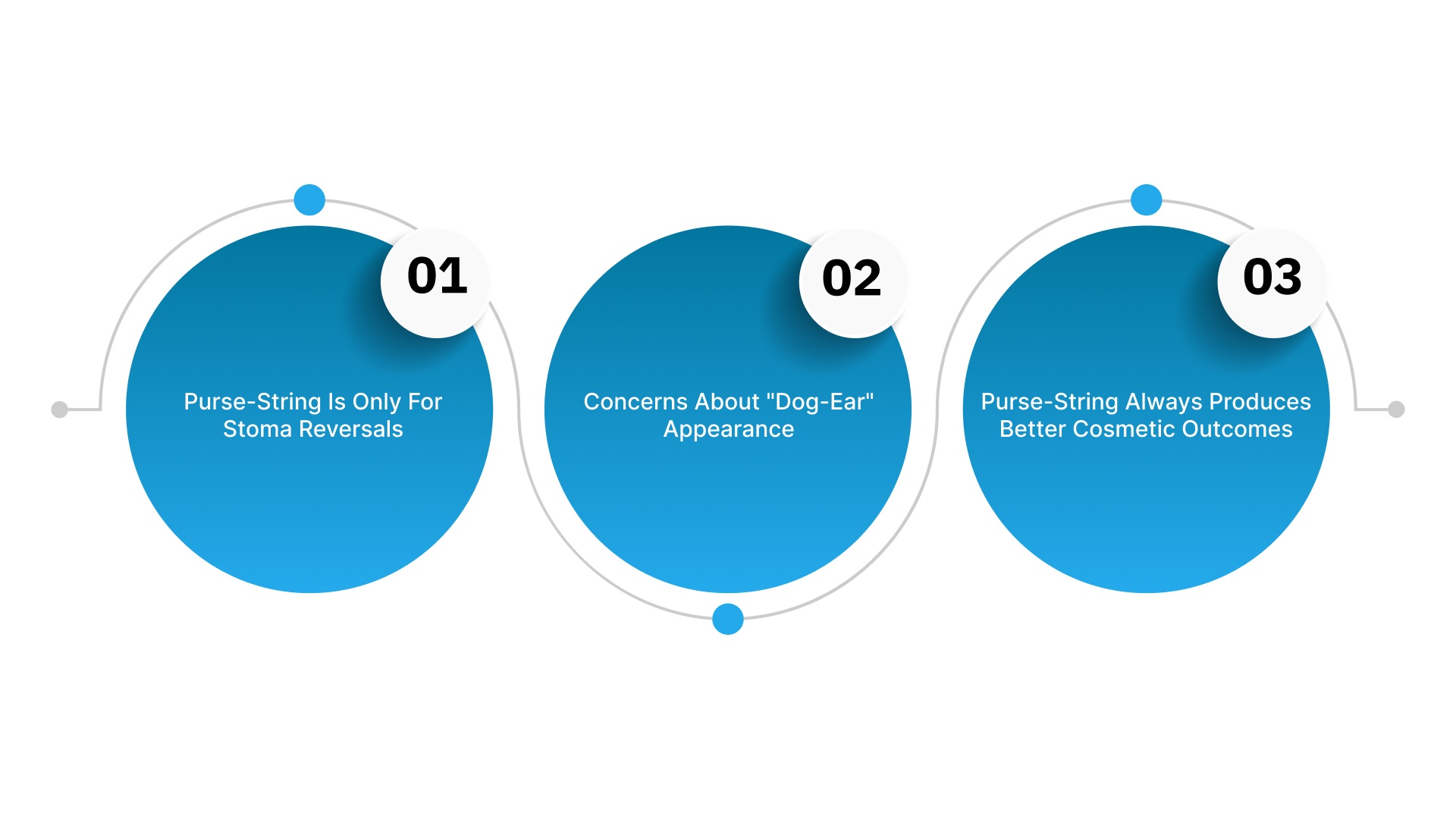
"Purse-String Is Only for Stoma Reversals"
While extensively studied in colorectal surgery, the technique has broader applications in dermatologic, plastic, and general surgery for any appropriate circular defect.
The principles of concentric tissue approximation and drainage apply equally to skin cancer excisions, cyst removals, and other circular wounds.
Concerns About "Dog-Ear" Appearance
Many practitioners worry about the radial skin folds created immediately after closure.
However, these folds typically flatten significantly within 2-3 weeks as tension redistributes and the central opening contracts. The temporary appearance shouldn't deter the appropriate use of the technique.
"Purse-String Always Produces Better Cosmetic Outcomes"
Despite the cosmetic advantages observed in many cases, outcomes depend heavily on proper patient selection, technique execution, and wound characteristics.
The technique isn't universally superior to all other closure methods—success requires matching the technique to the clinical context.
When Purse-String Closure May Not Be Appropriate
Clear Contraindications
Purse-string closure works best for specific wound types. Certain characteristics make this technique inappropriate or unsafe.
Wound characteristics that rule out purse-string closure:
- Irregular or stellate shapes that don't distribute tension evenly
- Defects >5-6cm diameter (excessive tension risk)
- Very thin or inelastic skin that can't support gathering
- Heavily infected wounds requiring open healing
Anatomic considerations also matter:
- Locations where radial folds create unacceptable cosmetic results (face, hands)
- Areas of constant high tension (over joints)
- Sites with insufficient tissue depth for subcuticular suture placement
Preferred Alternatives
When purse-string closure isn't appropriate, several alternatives offer better outcomes. Linear closure may be better when:
- Elliptical wounds have a favorable orientation along relaxed skin tension lines
- The wound is narrow relative to its length
- Minimal tension exists after tissue mobilization
Secondary intention may be safer when:
- Active infection requires open drainage
- Tissue viability is questionable
- Patient has severe healing impairment
Flap reconstruction may be necessary when:
- Defects are very large (>6cm)
- Location is cosmetically critical
- Functional considerations require specific tissue orientation
Decision-Making Signals
Consider alternatives if:
- Trial tightening creates excessive tissue blanching (ischemia risk)
- Patient has significant healing impairment (uncontrolled diabetes, active smoking, immunosuppression)
- The central opening would exceed 2cm after closure
- Radial folds create functional problems (near the eyes, mouth, or mobile areas)
Conclusion
Purse-string closure is a versatile surgical technique that reduces circular wound size through concentric tissue approximation, offering significant advantages in infection prevention, healing time, and cosmetic outcomes when properly applied.
Achieving outcomes depends on proper patient selection, anatomic considerations, and technical execution. The technique works best when chosen based on wound characteristics and surgical context rather than applied universally.
For appropriate circular defects 1-5cm in diameter with adequate tissue laxity, purse-string closure represents an evidence-based approach supported by high-quality randomized trials and professional society recommendations. Modern bioabsorbable closure systems like SubQ It! build on these principles, combining the speed of traditional staplers with subcuticular placement that eliminates the need for removal while optimizing cosmetic outcomes.
Frequently Asked Questions
1. What is the purse string skin closure technique?
Purse-string closure is a surgical suturing method where a continuous circular suture is placed around a wound's edge and tightened like a drawstring to reduce the wound's diameter by 60-80%. It leaves a small central opening for drainage while promoting faster healing with minimal scarring.
2. When is purse-string skin closure used?
It's primarily used for circular or elliptical surgical defects in stoma reversal procedures, dermatologic excisions, and clean-contaminated wounds. The technique works best for 1-5cm diameter defects in areas with adequate tissue laxity, like the abdomen or thigh.
3. What is purse string skin closure for ostomy closure?
In stoma reversal surgery, purse-string closure closes the circular ostomy site by gathering the skin edges concentrically, which reduces surgical site infections from 24% to approximately 5% compared to linear closure. It eliminates the "train track" scarring pattern from staples or traditional sutures while allowing drainage of contaminants.
4. How long does it take for a purse-string closure to heal?
The central opening heals completely within 3-6 weeks with proper wound care. The initial diameter reduction is immediate, and radial folds flatten progressively over 2-3 weeks.
5. What are the complications of purse-string closure?
Potential complications include suture dehiscence if tension is excessive, wound infection (5% for stoma sites versus 24% with linear closure), and temporary skin puckering that usually resolves. Rarely, tissue necrosis can occur if the suture compromises blood flow to the wound edges.
6. How does purse-string closure compare to traditional sutures and staples?
Purse-string closure offers infection rates of 5% versus 24% with linear closure for circular wounds, and delivers better cosmetic outcomes than staples by avoiding "train track" scarring. Modern bioabsorbable closure systems like SubQ It! can match stapling speed while providing subcuticular placement benefits, though traditional purse-string suturing requires more technical skill than simple interrupted sutures.